A place to stay: refurbishing to make room for life
3 September 2026
Moisés Royo · 30 january 2025 · Villa · Refurbishment
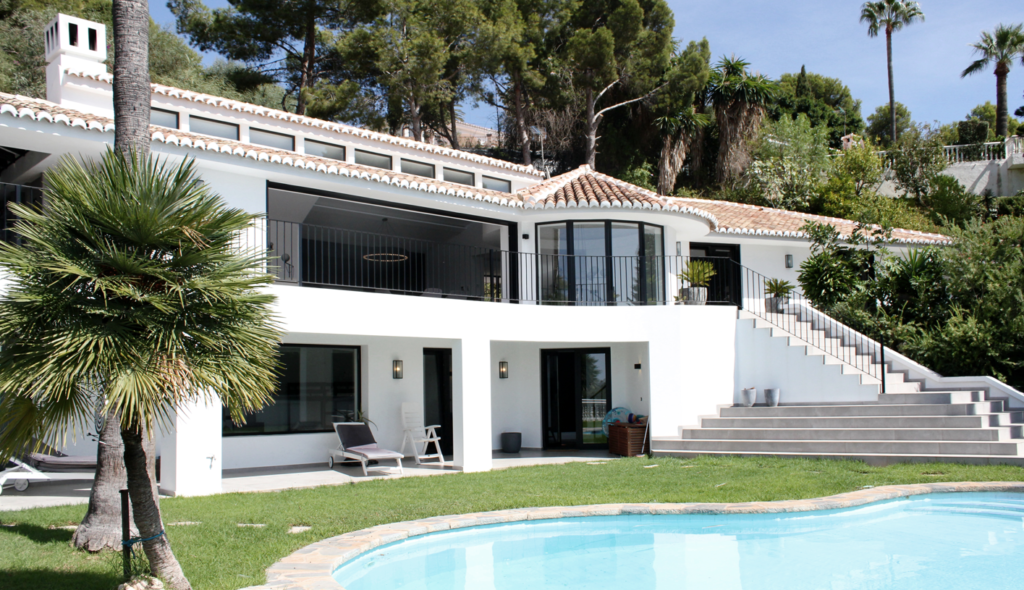
At Villa Benalmádena, architecture is understood through transition: a generous external stair, a terrace that distributes the rooms and a circular domed space acting as a hinge between the two wings of the house
Some houses are best explained through their rooms.
Others are better understood through the way we reach them.
Villa Benalmádena belongs to the latter.
The existing house is arranged across two levels and has a geometry in which transitional spaces acquire unusual importance. Stairs, terraces, porches and halls do more than move people from one place to another.
They are the elements that construct relationships between different parts of the house.
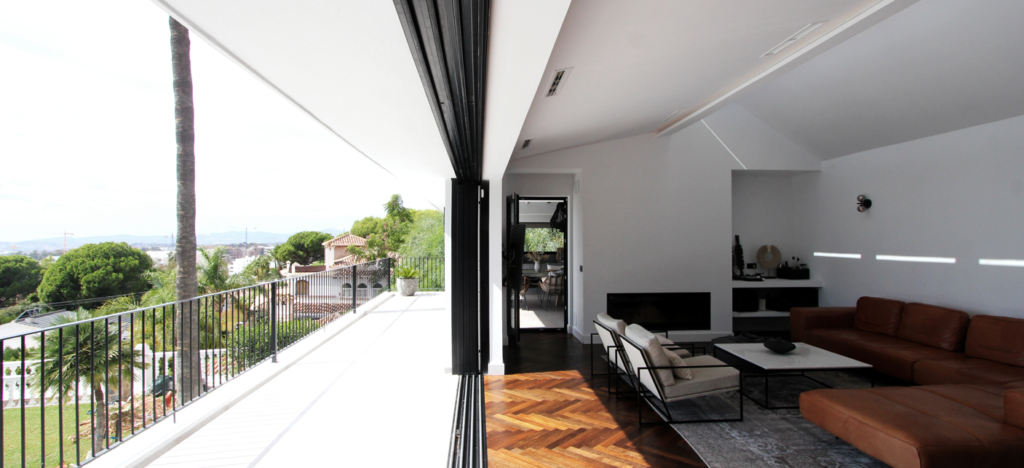
Working with an existing house means beginning with an architecture that already has its own logic.
There is a pitched roof. A partially sunken ground floor turning towards the interior of the plot. A larger upper storey. A terrace. A porch. Two wings.
And between all of them, a sequence of routes that explains how the house is put together.
Refurbishment does not begin with a blank page.
It begins by understanding which relationships deserve to be retained, reinforced or made visible again.
At Villa Benalmádena, that reading inevitably draws attention to the spaces of connection.
A generous stair dominates the inner elevation, leading to the first floor.
Its presence goes beyond the practical need to overcome a change in level.
The stair becomes exterior architecture.
The ascent leads to a terrace from which several rooms are reached. Moving through the house therefore involves stepping outside, climbing and crossing an open space before entering again.
Circulation is not concealed within a corridor.
It is made visible.
And by becoming visible, it begins to shape the identity of the house.
We usually think of a terrace as the destination beyond a room: somewhere reached after passing through the interior.
Here it can be read differently.
The terrace also distributes.
On the upper floor it accompanies access to different rooms and occupies the same position as the porch below. Exterior space and circulation overlap.
This creates a way of inhabiting the house closely related to the climate of Benalmádena: part of domestic life can unfold in spaces that are neither entirely inside nor entirely outside.
Movement ceases to be only movement.
It becomes a place to inhabit.
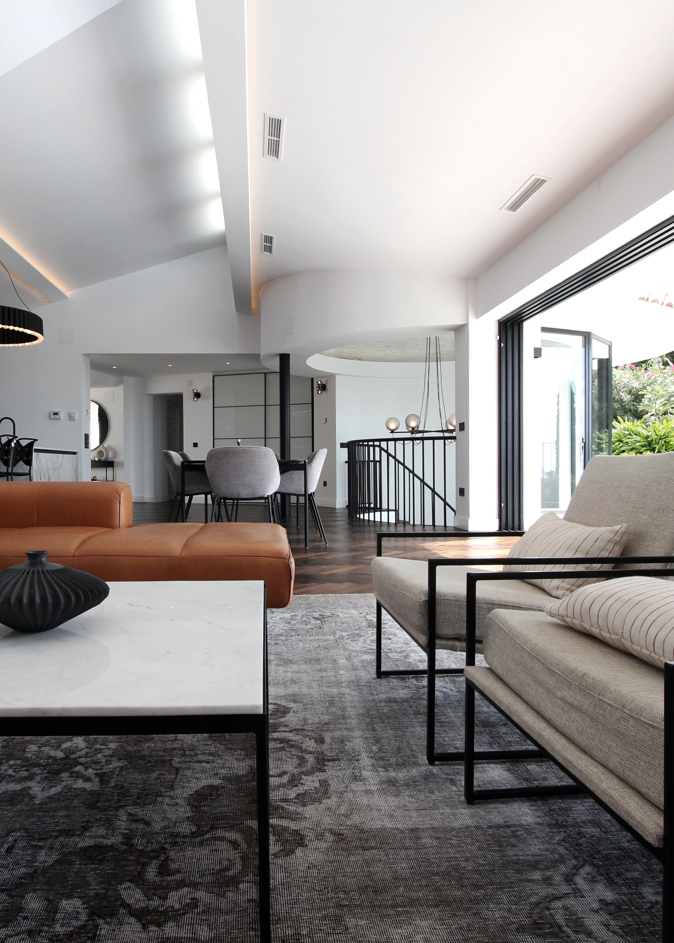
The most distinctive space may be found on the ground floor.
A circular room crowned by a dome contains the internal stair connecting the two levels.
Yet its significance lies in more than its shape.
The space acts as a hinge.
From here, the house opens in two directions: towards a large bedroom and exterior porch on one side, and towards the sauna and bathroom on the other.
The circular geometry introduces a moment of pause between linear routes: a centre from which the next direction is chosen.
It is more than a hall.
It is the place where the house changes direction.
The contrast between the two floors also shapes the project.
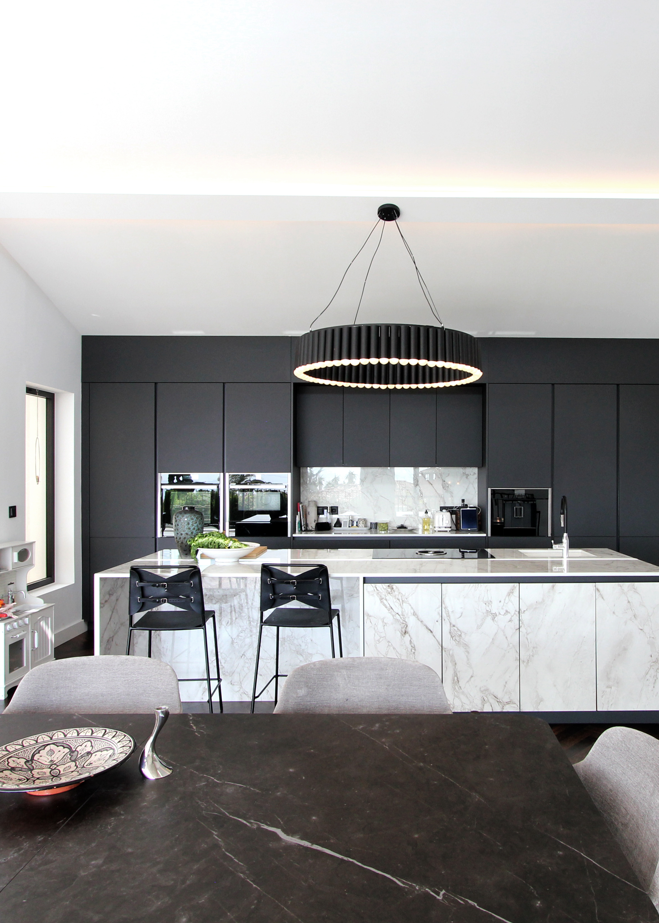
The ground floor is partially sunken and turns towards the interior of the plot. Above, the larger first floor contains the living room and kitchen, while bedrooms with bathrooms occupy the opposite wing.
The same house therefore contains two different relationships with the outside.
Below, a more contained condition.
Above, a more open relationship with the plot.
Architecture does not require every space to behave in the same way. Its richness can emerge precisely from difference.
Stairs. Halls. Terraces. Porches.
On a plan, they might appear secondary beside the living room, kitchen or bedrooms.
Yet they determine how a house is discovered.
They decide when we climb.
When we step outside.
When we change direction.
And where we enter again.
Villa Benalmádena offers another way of looking at refurbishment: not only through the rooms a house contains, but through the spaces that connect them.
Because a house is not inhabited only when we stop.
It is also inhabited as we move through it.