A place to stay: refurbishing to make room for life
3 September 2026
Moisés Royo · 31 august 2026 · In development · Under construction · Refurbishment
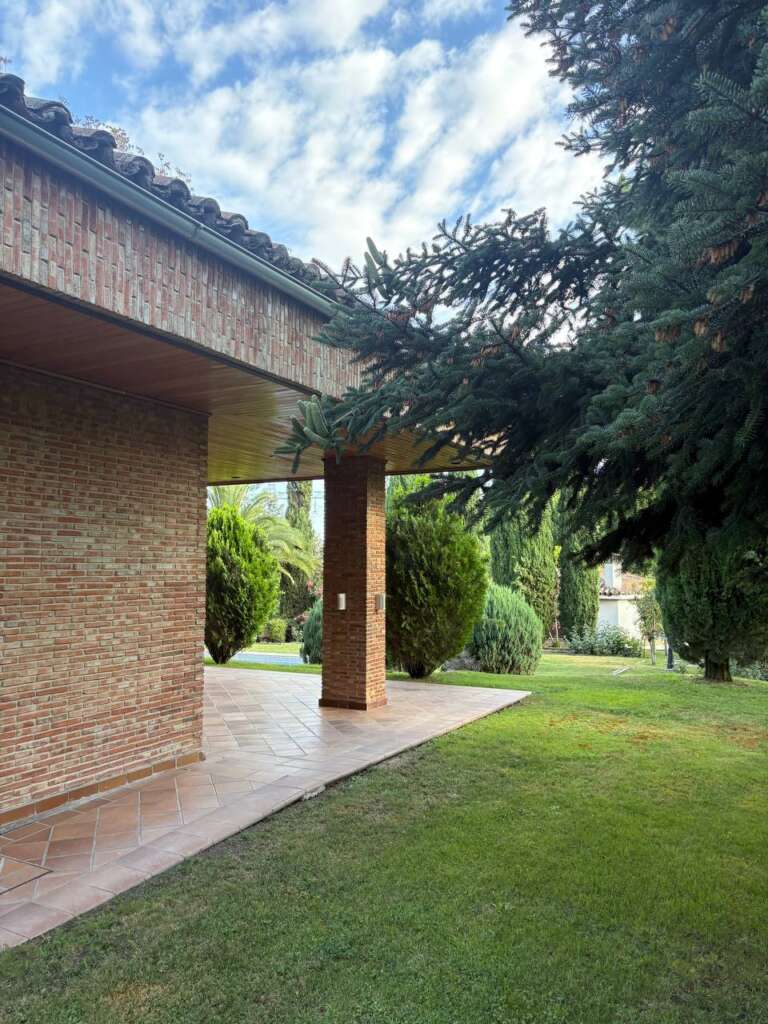
Casa Arrecife is entering a moment of transition. In Somosaguas, an almost 1,000 m² house is being stripped back, closing one way of living and making room for another.
For years, this house held a particular life.
Everyday gestures.
Conversations.
Routines that gradually made its rooms familiar.
Now another chapter is beginning.
At Casa Arrecife in Somosaguas, an almost 1,000 m² home is entering a period of complete transformation. The initial strip-out marks the beginning of a major renovation and reveals a moment architecture rarely pauses to document: the point at which a house starts to lose its former identity before the next one has fully emerged.
This is where the project is now.
Between one story and the next.
Working with an existing house demands a different kind of beginning.
Before imagining what comes next, the architect has to understand what is already there.
Homes retain traces of the lives they have contained: particular routes through rooms, relationships with a garden, ways of seeking daylight and habits of occupation. Even when those patterns are about to change, the existing architecture remains the material from which the project begins.
Renovation is therefore not simply demolition in preparation for something new.
It also requires attention.
A judgement about what can remain, what needs to change and what must disappear before another spatial order can become possible.
Stripping out becomes more than a physical operation.
It becomes a way of reading the house.
Building projects are usually narrated through what is added.
Yet construction often begins with removal.
At Casa Arrecife, the first stage exposes an architecture that would normally remain concealed. As finishes, partitions and elements belonging to the previous occupation are taken away, the underlying spatial condition of the house begins to emerge — together with the possibilities on which its transformation will depend.
It is provisional.
Incomplete.
And that is precisely what makes it valuable.
There is no new house yet, but the process has begun through which another relationship with daylight, space, landscape and everyday time can be constructed.
Houses change because the people who inhabit them change too.
A home shaped around one set of routines may need to be reconsidered when new owners arrive with different expectations and another way of living.
At Casa Arrecife, the change of ownership opens that process. One pattern of occupation has ended; another is only beginning to be imagined.
Between the two lies an unusual condition.
Rooms empty.
Objects disappear.
Spaces temporarily lose the functions that once defined them.
The house no longer belongs entirely to its previous story, yet it has not acquired the identity of the next.
This in-between state is not
Completed architecture tends to conceal the route that produced it.
Once a home is occupied again — furnished, used and absorbed into daily routines — it becomes difficult to remember the moment when almost everything was still open to possibility.
That is why this stage deserves attention.
Before the finished image.
Before decisions become permanent.
Process reveals architecture as a sequence of choices rather than a final composition: what to retain, what to remove, what to reorganise and how an existing house can support a new way of living without pretending that nothing came before it.
A renovation begins long before its new finishes appear.
It begins when the existing building is seen differently.
Every transformation contains a strange and precise moment.
The house is no longer what it was.
But it is not yet what it will be.
That condition resembles a threshold.
A place that belongs fully to neither side, yet makes the passage between them possible.
Casa Arrecife is there now.
What is beginning is more than a building site. It is the possibility of different routes, another relationship with daylight and garden, and a new way for space to accompany everyday life.
In time, these rooms will fill again.
There will be other gestures.
Other conversations.
Other days.
The completed house may eventually feel inevitable, as though it had always been that way.
For now, however, we can still see it at the exact point where one story ends and another begins to take shape.