Beyond sport: a swimming pool as an urban landmark
8 October 2026
Moisés Royo · 11 December 2025 · Competitions
At Alarcón, an experimental project explores another way of living: passive buildings embedded in the landscape and open to climate, planting and shared life
Retreat does not necessarily mean withdrawing from the world. It may simply mean allowing time to be measured differently.
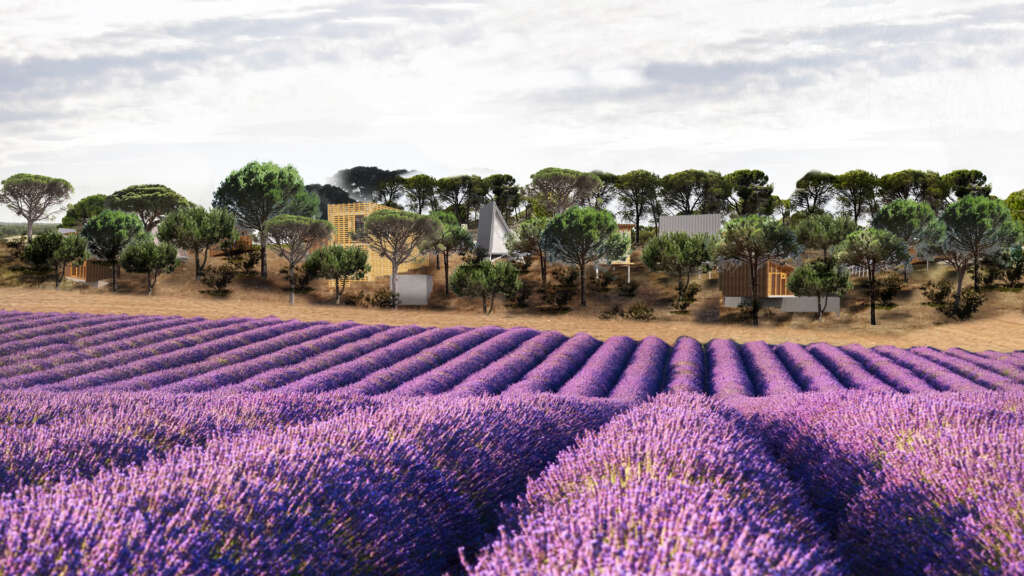
At Alarcón, Alojamientos para el retiro begins with a straightforward question: what kind of architecture do we need when urgency no longer structures the day? Developed in 2023, the proposal uses passive buildings integrated into the landscape of Cuenca as the basis for a different way of living.
Less energy.
Less noise.
More landscape.
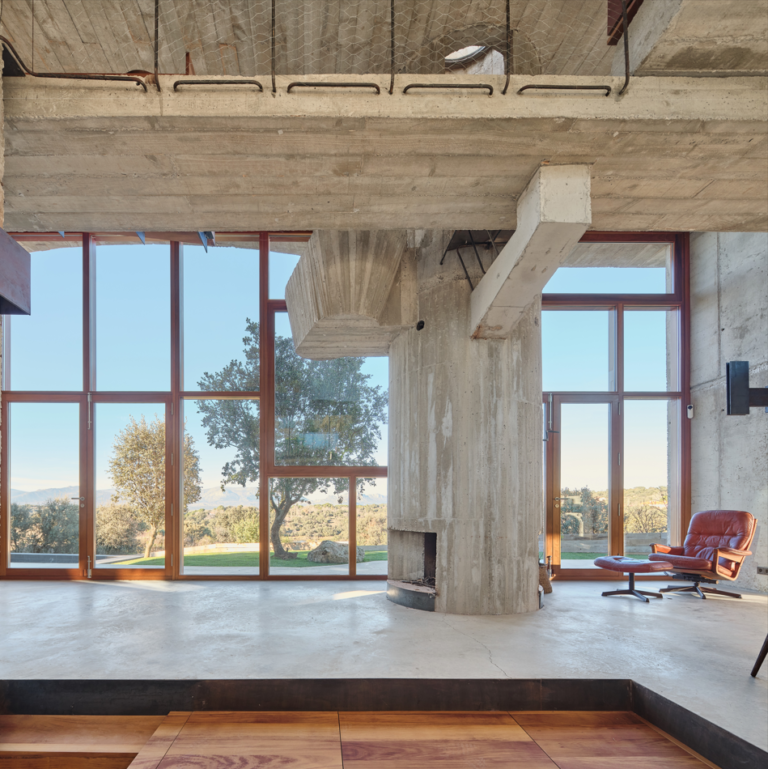
Reduction is not treated as deprivation, but as precision. If architecture is to consume less, it must become more attentive to what is already there: climate, orientation, planting, daylight and the conditions of the site.
The buildings therefore emerge from passive principles and from their relationship with the landscape. Rather than behaving as autonomous objects, they belong to a wider environmental system in which building and setting work together.
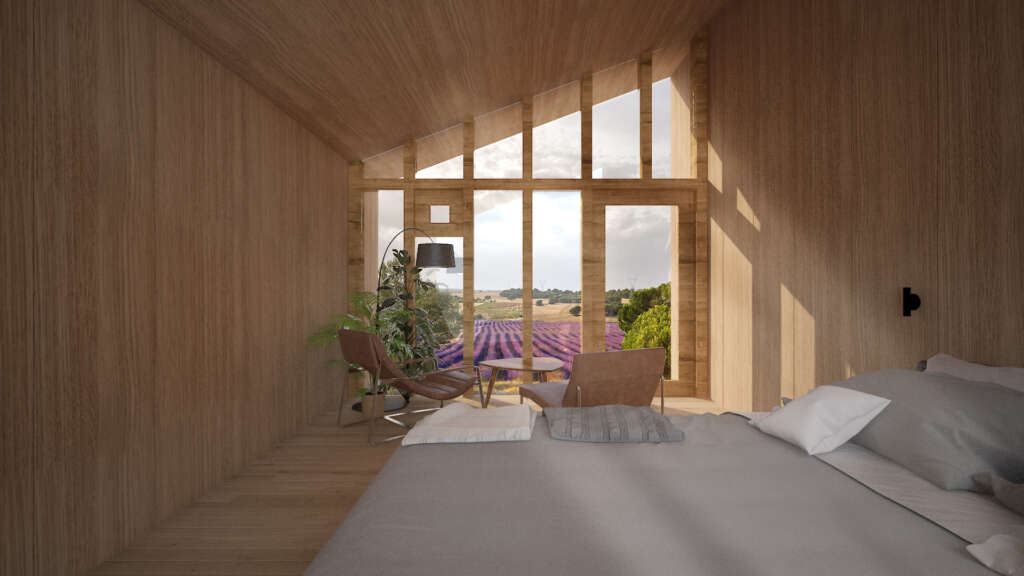
Accommodation for retreat cannot be reduced to a sequence of bedrooms. Life also happens in the spaces between them.
Courtyards. Routes. Thresholds. Outdoor rooms. Places to meet and places to be alone.
These intermediate spaces broaden the idea of accommodation. The project is not only about enclosed rooms, but about degrees of relationship: with other people, with planting, with climate and with landscape.
The buildings are conceived almost as refuges: lightly related to the terrain, responsive to environmental conditions and intended to support a less hurried form of everyday life.
Here, refuge does not mean isolation. It means protection without disconnection — the possibility of withdrawing while remaining part of a landscape and a community.
The project is shaped by this movement between two conditions. Being alone need not mean being cut off. Sharing space need not mean being constantly together.
Courtyards, routes and thresholds allow those relationships to be calibrated. Architecture does not prescribe one model of communal life; it offers different places and distances from which people can choose how to inhabit it.
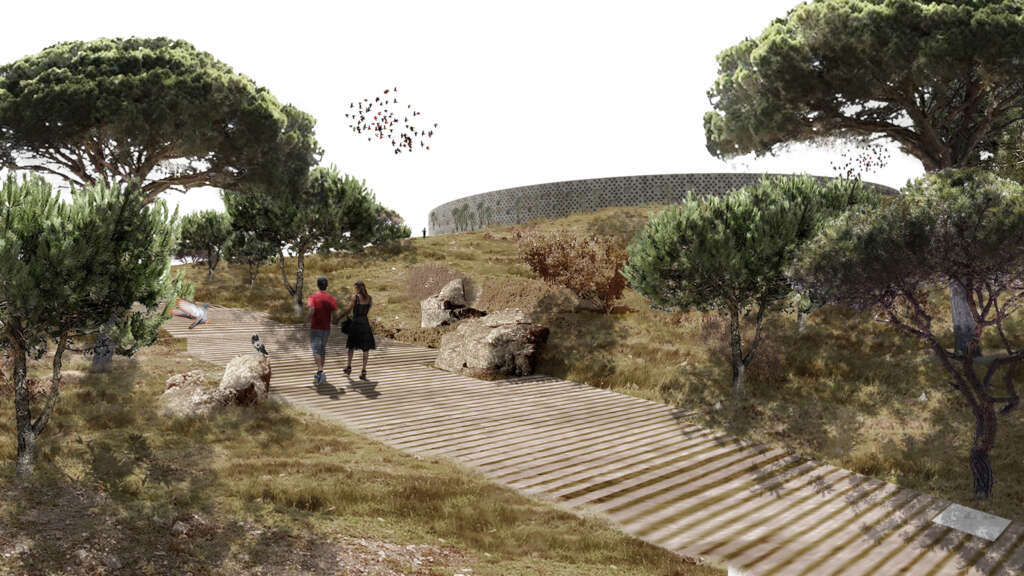
As an experimental project, Alojamientos para el retiro remains deliberately open-ended. Rather than defining a single answer to how this stage of life should be lived, it tests new relationships between architecture, energy, landscape and time.
Ideas.
Sketches.
Memories.
New ways of living.
Perhaps that is where the project is most relevant: retirement is not treated as a fixed typology, but as an opportunity to reconsider what we genuinely need from architecture.
Less consumption. Less noise. Greater contact with the outdoors. More spaces able to move between privacy and encounter.
Behind all of these decisions remains one simple question: