A place to stay: refurbishing to make room for life
3 September 2026
Moisés Royo · 16 June 2026 · Refurbishment
A residence of more than 500 m² in Madrid’s Goya district, where classical heritage, fine materials and contemporary decisions coexist without competing
There are homes we do not enter in order to change them.
We enter in order to listen.
The project on Calle Alcalá, in Madrid’s Goya district, began with a very clear condition: a residence of more than five hundred square metres, with a classical heritage that should not disappear.
The aim was not to erase its character.
Nor was it to freeze it in time.
The challenge was more subtle: to preserve the home’s refined character while giving it a contemporary life. To allow its mouldings, doors, parquet flooring, proportions and generous scale to coexist with fine materials, contemporary pieces and new ways of living.
In some projects, the architect’s role is not to impose a language of their own.
It is to look more closely.
Alcalá did not call for a radical transformation. It called for a precise intervention, capable of understanding what the home already was and carrying it into another time without breaking its continuity.
Sometimes, the architect’s own style must take a secondary role. Not to disappear, but to sharpen the way we look. The house, its history and the people who will inhabit it then begin to take centre stage.
This approach is particularly important in homes with an established identity. When a house carries a memory, every decision must carefully consider what is preserved, what is transformed and what is introduced anew.
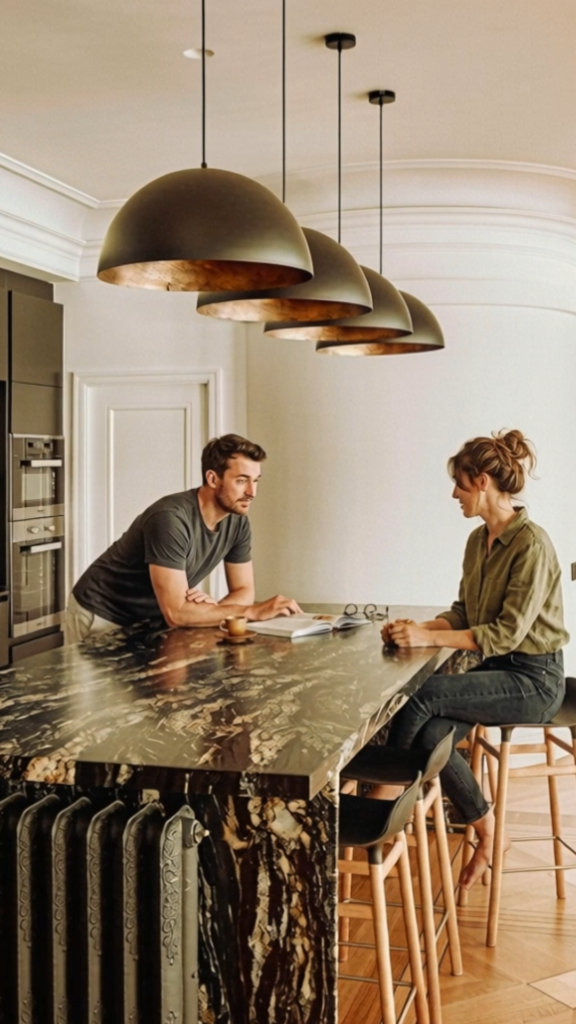
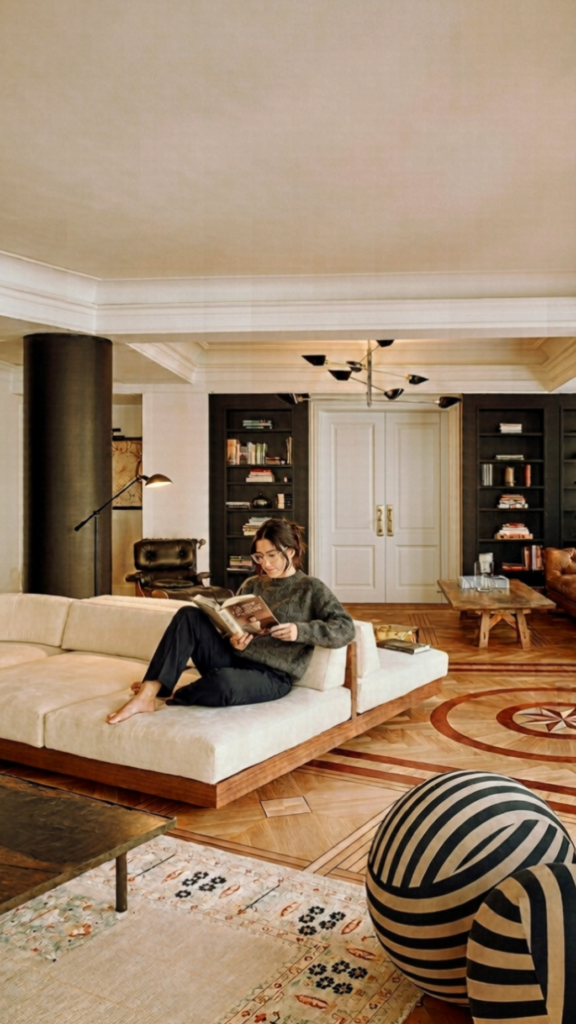
The intervention works with a very precise tension: preserving the home’s classical atmosphere without turning it into a recreation of the past.
The contemporary elements were not intended to compete with what was already there.
Nor were they meant to disappear. They were there to accompany it.
The new elements are therefore introduced through a logic of continuity: fine materials, clean geometries, precise solutions and a carefully considered relationship with light, timber, stone, textiles and the original features.
Stone does not appear as luxury. It appears as permanence.
Timber does not appear as nostalgia. It appears as continuity.
The contemporary does not seek attention. It accompanies.
In a home of this scale, value lies not only in the final image. It lies in the accumulation of decisions that allow everything to feel natural.
The pattern of the parquet.
The weight of a stone table.
The proportion of a door.
The continuity between rooms.
The relationship between a classical moulding and a contemporary piece.
The way light is softened by textiles.
Every element takes part in a conversation across time.
The intervention does not seek to erase the traces of what came before, but to establish a harmonious coexistence. To make the new feel not like an addition, but like a necessity. To ensure that the classical is understood not as a constraint, but as material for the project.
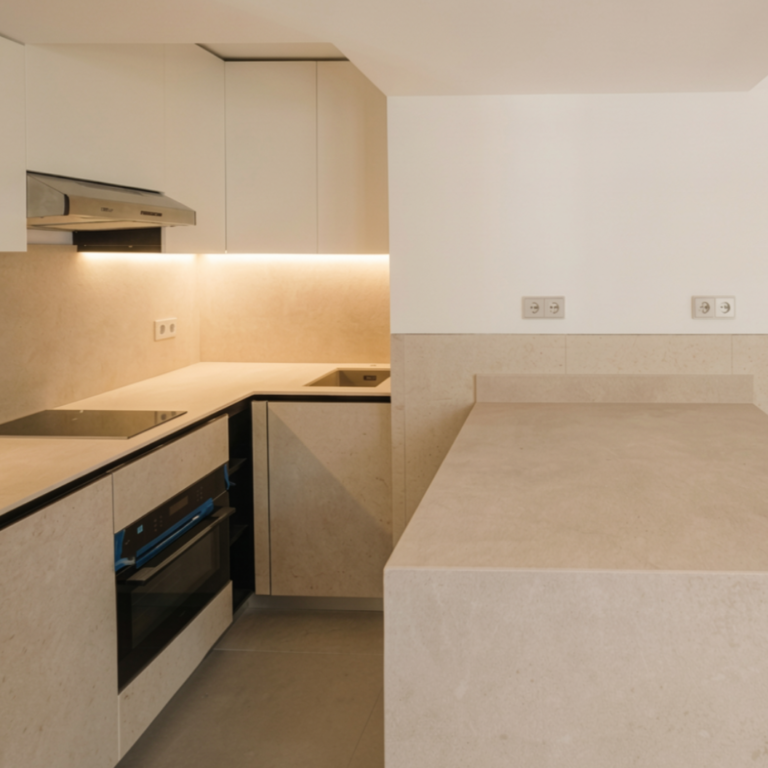
Detail of a natural stone table at the Alcalá 106 residence, featuring fine materials and contemporary design
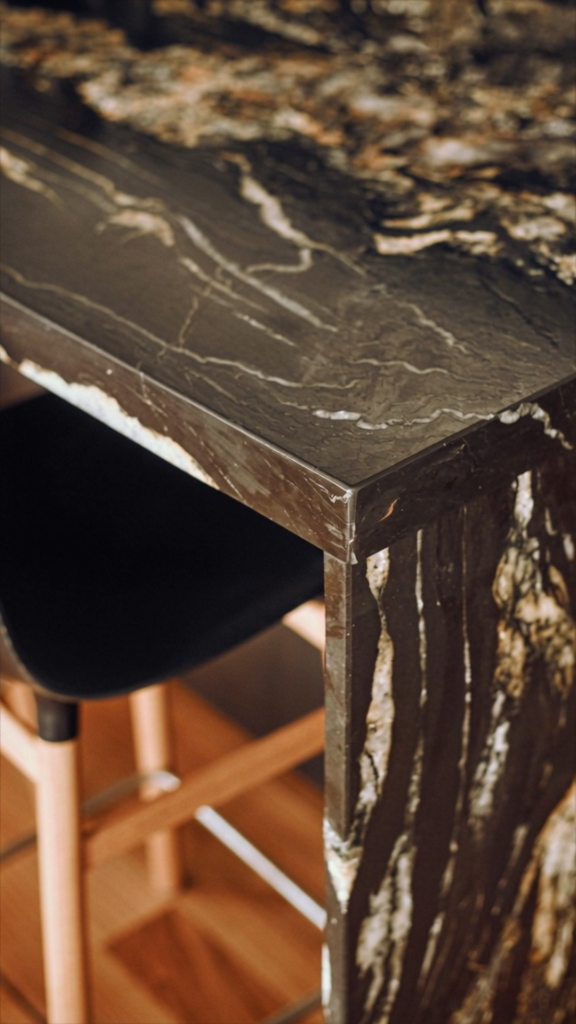
Detail of a natural stone table at the Alcalá 106 residence, featuring fine materials and contemporary design
A truly timeless home belongs neither solely to the past nor to the pursuit of fashion.
It is one that withstands the passage of time because it does not depend on an immediate gesture. It is shaped by proportions, materials, atmospheres and decisions that do not need to assert themselves.
On Calle Alcalá, contemporary elements are introduced with restraint. They do not raise their voice. They do not try to announce their newness. They become part of a home that already had a history, allowing that history to continue.
That balance is difficult.
Too much intervention would have erased the home’s memory.
Too much restraint would have brought the project to a standstill.
Architecture emerges precisely at that point in between: when the existing and the new begin to breathe together.
The aim was not to create a home with an immediately recognisable style.
The ambition went deeper: to make everything feel, upon entering, as though it had always been there.
For different periods not to confront one another.
For materials not to compete.
For the classical not to feel old.
For the contemporary not to feel imposed.
Alcalá is an intervention concerned with memory, scale and continuity. A home where the project is understood not as a rupture, but as a conversation.
Because some renovations transform a space.
And others achieve something different:
allowing different periods to coexist without losing their voice.