Creative multi-sports space in Torres de la Alameda
12 March 2026
Moisés Royo · 30 marzo 2026 · Landscape · Atmosphere
A tourist recreation facility where contemporary architecture enters into dialogue with rural memory, matter, ceramic tiles, shadow and the horizon
Some projects do not seek to occupy the landscape.
They seek to become part of it.
The Tourist Recreation Point in Robregordo emerges from a careful reading of the rural world: pitched roofs, ceramic tiles, the chimney, matter, the horizon, light and shadow.
The intention was not to imitate traditional architecture.
It was to listen to it.
To recognise its essential elements and reinterpret them in a different way: more abstract, more precise, more contemporary.
The result is a minimal intervention, yet one capable of establishing a presence. Architecture that understands its scale, its position and its relationship with its surroundings without needing to impose itself.
Rural architecture has a quiet strength.
It depends not only on the form of its roofs or the presence of certain materials. It also lies in the way it sits within the territory, receives light, creates shadow, relates to the ground and measures its presence against the horizon.
At Robregordo, the project does not reproduce these codes literally.
It transforms them.
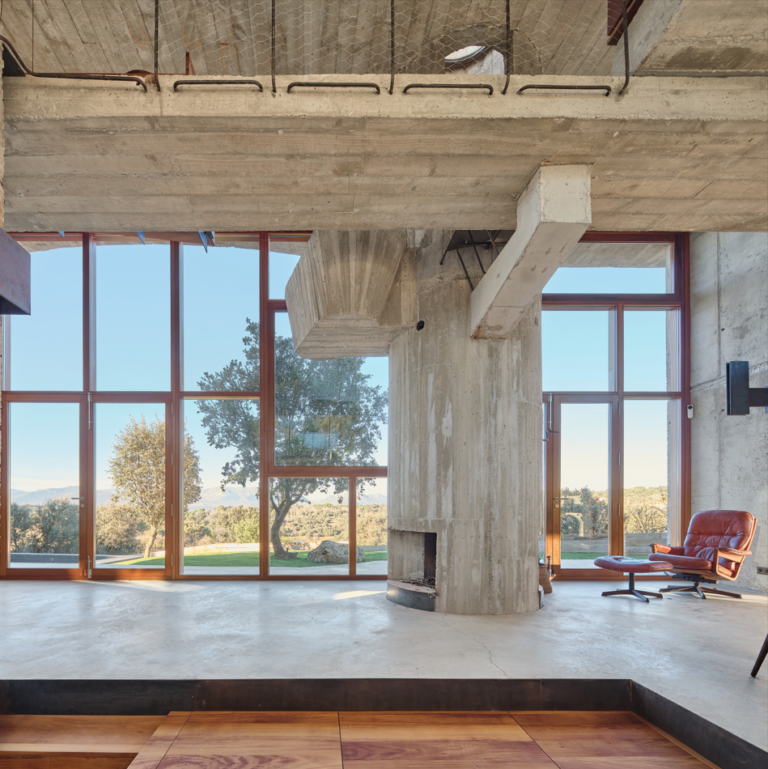
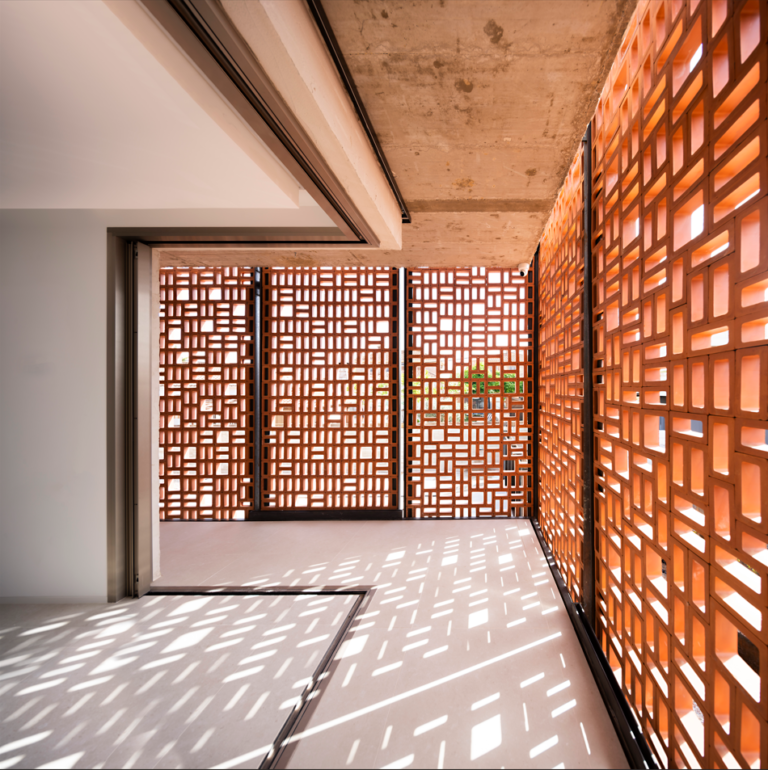
The pitched roof, ceramic tiles, the mass of the volume, the position of the openings and the way each plane receives light create an abstract interpretation of this rural memory.
There is no nostalgia. There is interpretation.
Architecture looks to the past not to copy it, but to understand what still makes sense.
At first glance, the project appears restrained, almost elemental.
But its simplicity is not immediate.
Each face of the volume acquires a different weight. Some planes receive the light. Others remain in shadow. The openings are not arranged as an indifferent repetition, but as carefully measured apertures connecting inside and outside.
The gargoyle, connections at different levels, the mass of the façades and the position of the openings introduce a precise complexity into an apparently simple piece of architecture.
This is one of the keys to the project: adding no more than necessary, while ensuring that every decision has intensity.
Each plane alters the perception of the volume.
Each shadow changes its presence.
Each opening measures a distance to the landscape.
Each material contributes to the reading of the place.
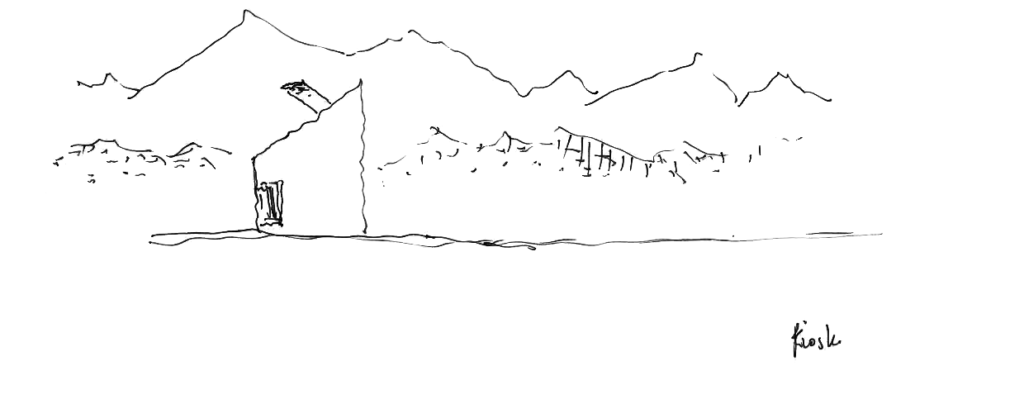
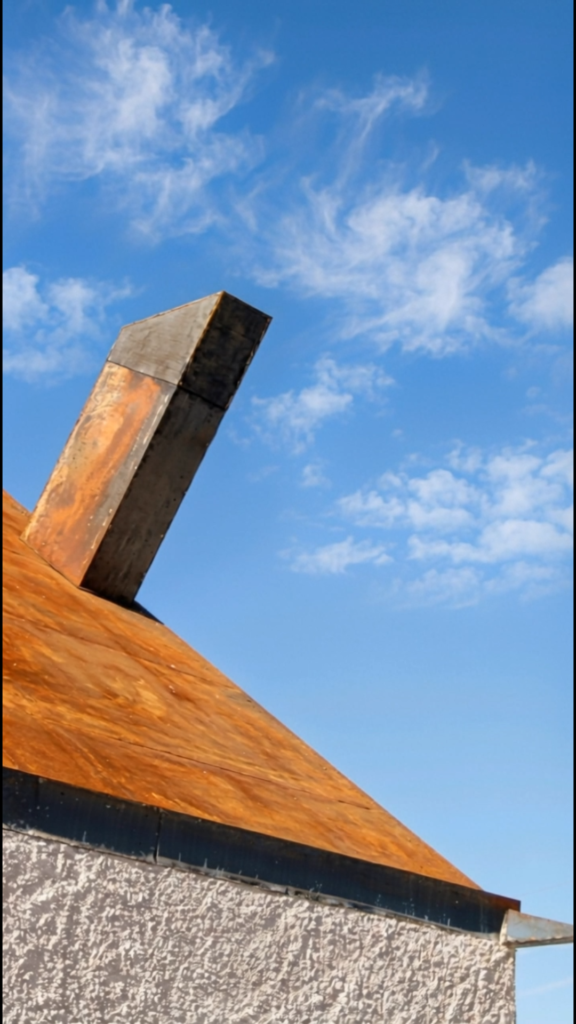
A small-scale public facility can become more than a functional building.
It can act as a point of reference.
As a pause.
As a way of looking at the surroundings.
PRT Robregordo is conceived not as an autonomous object, but as a piece connected to the landscape.
Its value lies not only in what it contains, but in how it is positioned, how it presents itself to visitors and how it transforms the experience of the place.
Here, architecture does not seek monumentality.
It seeks precision.
To sit in the right place.
To measure its scale.
To establish just enough presence.
To allow the landscape to complete it.
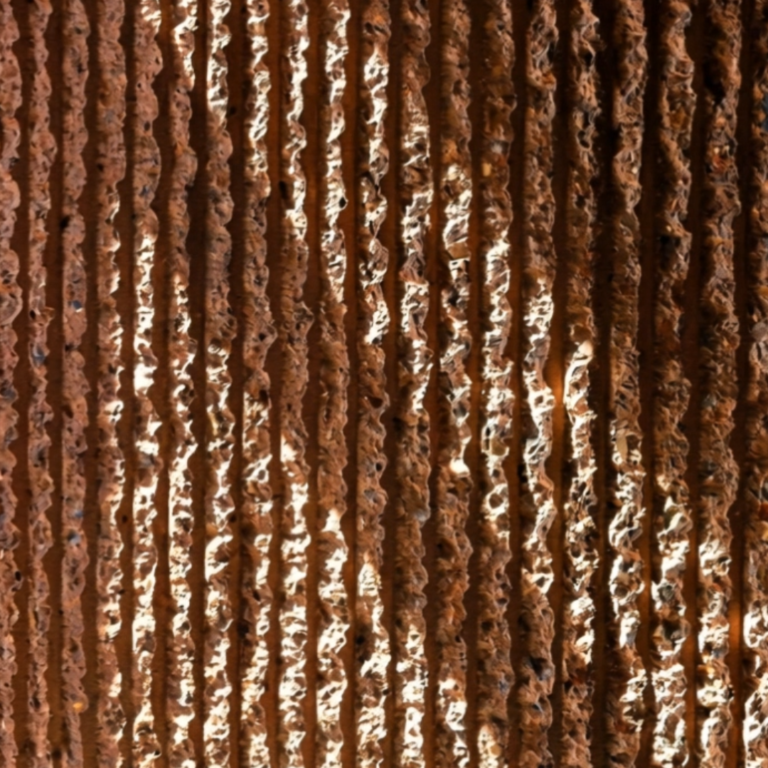
The ceramic tiles, pitched roof and material presence of the volume do not appear as picturesque devices.
They are architectural tools.
Matter allows the building to belong to its surroundings.
The roof acknowledges a construction tradition.
Shadow gives depth to the volume.
Light reveals its geometry.
The horizon completes the architecture.
In a project such as this, the landscape is not a backdrop. It is an active part of the project.
The architecture cannot be understood without what surrounds it. The building therefore does not attempt to separate itself from the place, but instead establishes a slower relationship with it.
There are projects whose strength lies in the gesture.
And others whose strength lies in attention.
PRT Robregordo belongs to the latter. Architecture that does not seek distinction through excess, but through precision. That does not turn the rural into decoration, but takes it as a point of departure. That understands the contemporary not as rupture, but as a precise way of looking again.
Because building in a rural setting carries a particular responsibility.
Simply placing an object there is not enough.
The place must be understood.
The scale.
The memory.
The matter.
The light.
The silence.
And only then, to intervene.
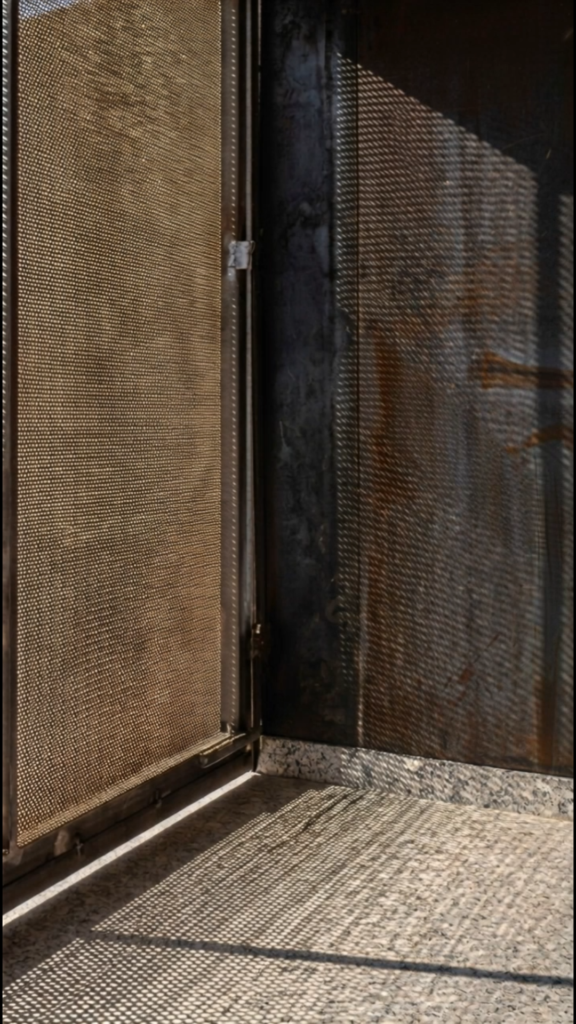
The Tourist Recreation Point in Robregordo demonstrates how a small piece of public architecture can acquire great intensity when it emerges from a precise reading of its surroundings.
It does not need to impose itself.
It does not need to explain too much.
It does not need to occupy more than necessary.
It simply needs to be well placed.
For matter to enter into dialogue with the place.
For geometry to measure its presence.
For light and shadow to activate its planes.
At Robregordo, architecture becomes a piece of landscape.
A quiet way of being.