The house revealed by mist
12 November 2026
Moisés Royo · 10 September 2025 · Refurbishment · Villa
At Villa Bendinat, the project begins with an existing house and a precise operation: removing spatial obstacles to rebuild a clearer relationship between interior, terrace and sea
The house was already there.
Which meant the project could not begin by asking what else should be added.
The first question was what prevented the existing house from working as well as it could.
At Villa Bendinat in Mallorca, the renovation is driven by a measured act of subtraction: freeing the plan and reorganising rooms and routes to establish a much more direct relationship between the interior, the terrace and the Mediterranean.
Where the house was once interrupted, spaces now connect.
The eye travels through the interior.
And repeatedly finds the sea beyond.
Renovation begins from a different architectural condition.
There is no blank page. Structure, orientation, circulation and an established way of occupying the house are already present. Some of those conditions remain valuable; others no longer respond to the way the building needs to be lived in.
The project therefore begins with reading rather than replacing.
At Villa Bendinat, that reading revealed that transformation did not depend on introducing a new layer of architectural gestures. Much of its potential lay in the opposite move: removing obstacles, clarifying relationships and allowing previously fragmented areas to work together.
Renovation does not always mean doing more.
Sometimes it means making room.
A partition does more than separate two rooms.
It can stop a view, redirect movement, reduce daylight or prevent spaces from participating in the same experience.
Freeing the plan is therefore not simply a matter of removing walls.
It is about deciding which boundaries remain necessary and which no longer contribute to the house.
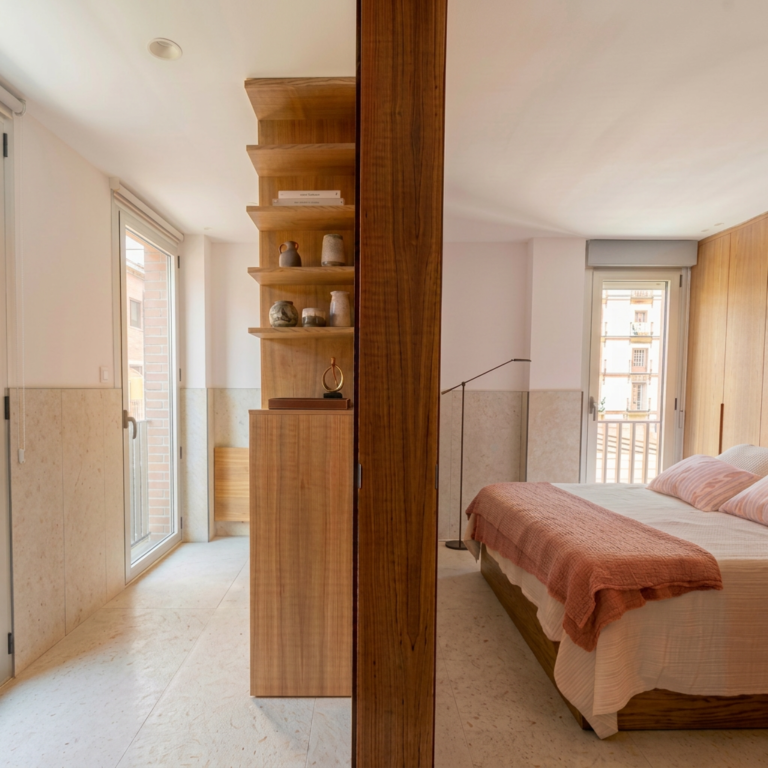
Once the rooms are reorganised, the interior acquires greater continuity and visual depth. Spaces cease to feel like isolated compartments and begin to form a connected sequence.
The architecture becomes less fragmented.
And the landscape becomes more present.
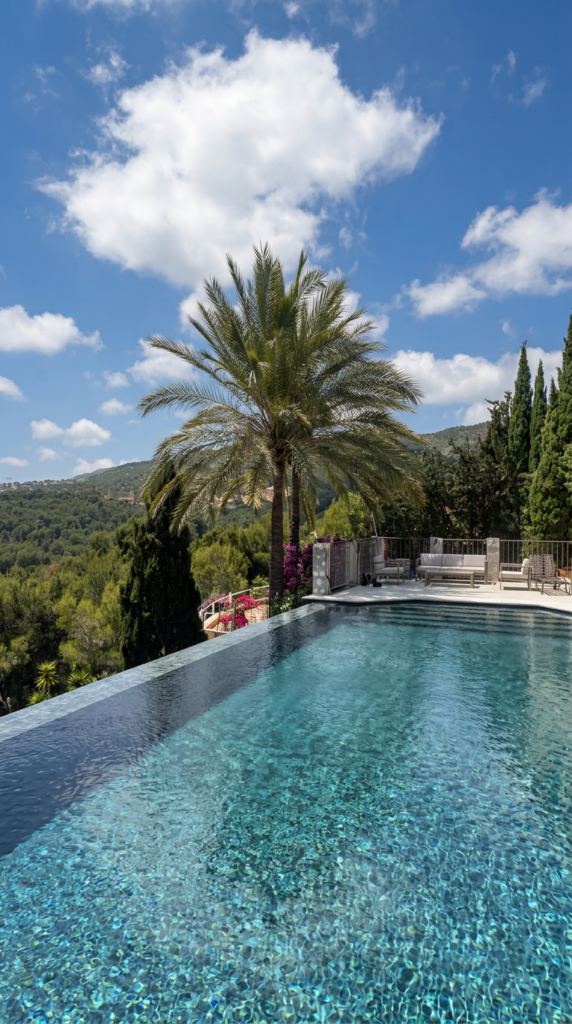
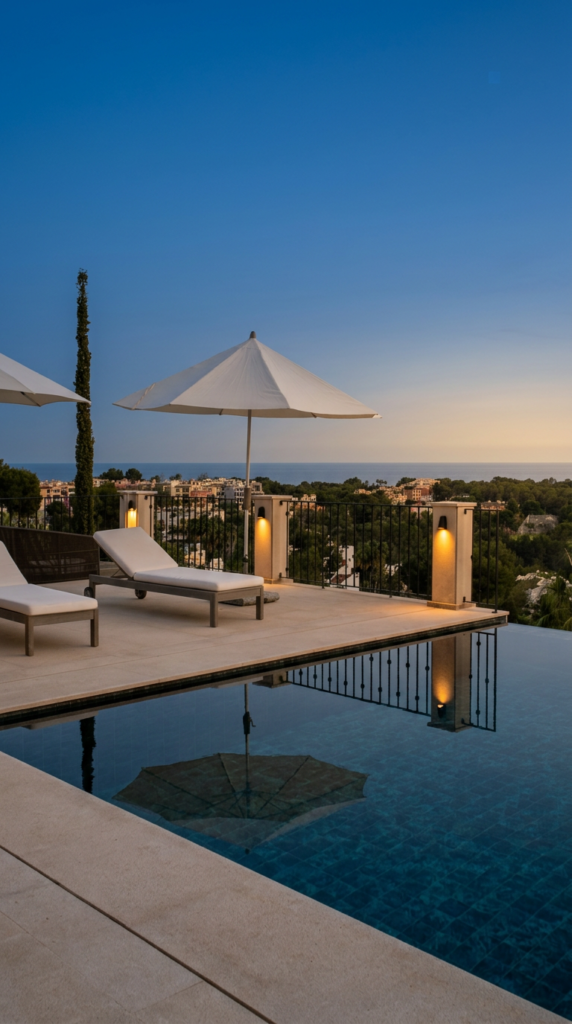
A relationship with the Mediterranean cannot be reduced to a window. It is built as a sequence.
Interior.
Terrace.
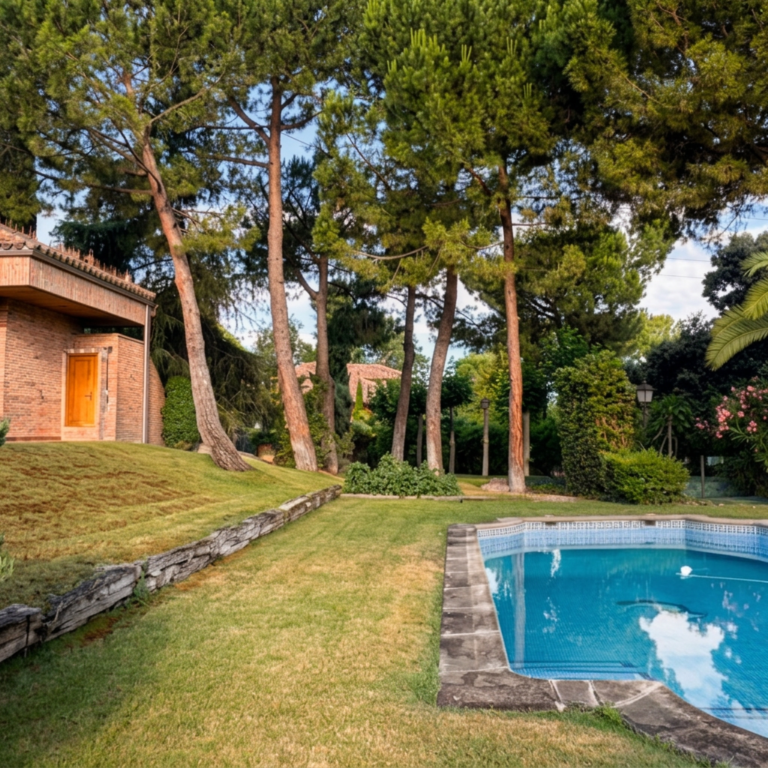
Pool.
Sea.
The renovation works across these transitions so that each space extends the one before it. Living areas open towards the exterior and the terrace is no longer perceived as an appendage to the house, but as part of its spatial organisation.
The threshold becomes less abrupt.
Not because inside and outside are made identical, but because the journey between them is no longer defined by unnecessary interruption.
The house establishes a more immediate relationship with the place it has always occupied.
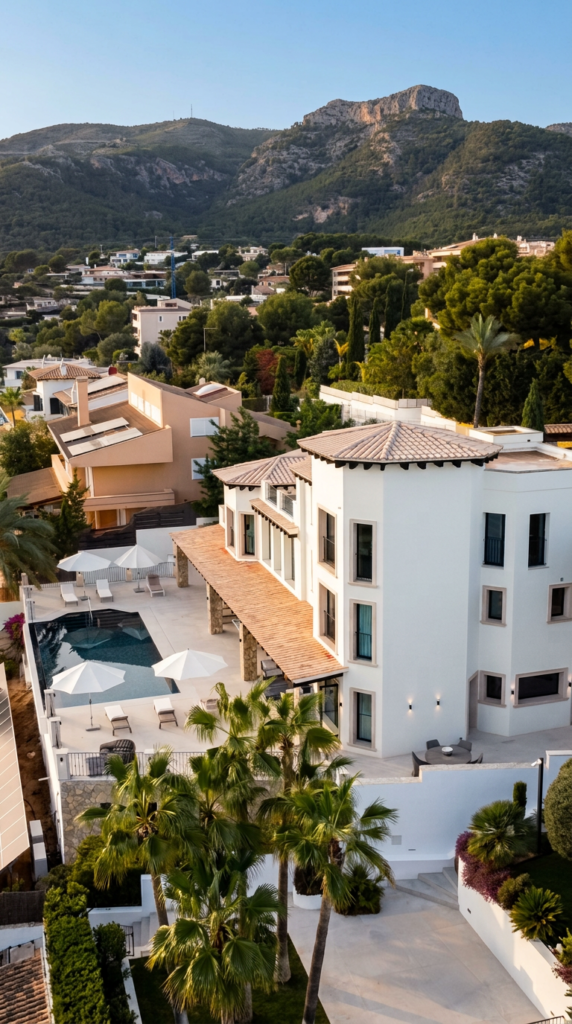
Having the Mediterranean in front of a house does not automatically make it part of the architecture.
For a view to genuinely organise space, it needs to influence orientation, movement and occupation.
At Villa Bendinat, the revised plan allows sightlines to travel through the house and repeatedly meet the horizon.
The sea gives the interior depth.
It makes the physical limits of the building feel more distant and turns the landscape into a constant reference within everyday movement.
The project is not simply about opening a house towards an exceptional view.
It is about allowing that view to shape the way the house is inhabited.
Renovation is often associated with replacement: new materials, new elements, new forms.
But transformation can also come through reduction.
Identifying what is excessive.
Understanding what is missing.
And deciding what needs to disappear for the existing architecture to work differently.
This precision matters when working with a building that already has its own logic. Every intervention must justify why something remains, changes or is removed.
The value of the project is therefore not measured by the number of new gestures, but by how effectively a limited set of decisions can alter the experience of the house.

Villa Bendinat does not attempt to erase the previous house and replace it with another.
The renovation acknowledges what is already there and works from within it.
It frees.
Reorganises.
Connects.
Fragmentation gives way to continuity. Interrupted views acquire depth. Interior and exterior become part of a sequence that ultimately reaches the sea.
Because renovation does not always require architecture to be transformed beyond recognition.
Sometimes it requires a precise understanding of what should remain, what is missing and what needs to disappear.
Until the house rediscovers the landscape that had always been in front of it.