Invisible decisions: Estudio Fontenebro
23 April 2025
Moisés Royo · 03 march 2025 · Materiality · In development · Under construction
A reflection on how light can transform a building throughout the day, making the passage of time visible across its façade.
There are façades that change with the hour.
They do not need to move.
They simply need to receive the afternoon light.
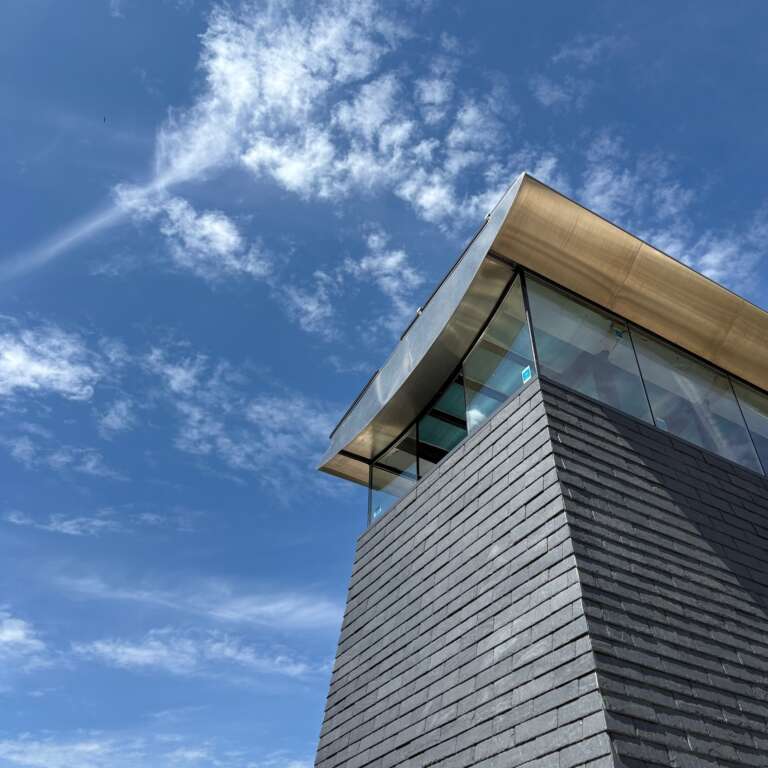
At the Fontenebro Pavilion, light does not fall on the architecture as an added effect. It moves slowly across it. It lingers at the edges, enters into matter and draws a different shadow with every passing minute.
The façade then ceases to be a fixed plane.
It becomes a surface sensitive to time.
Architecture does not always reveal itself through grand gestures. Sometimes it emerges through something far more precise: the way a material receives light.
A façade can appear closed in the morning and profoundly different towards the end of the day. It can become more opaque or more vibrant depending on the angle of the sun. It can acquire depth not only through its physical construction, but through the shadows held within its surface.
At Fontenebro, this relationship between light and matter transforms the way the pavilion is perceived.
The afternoon light defines the edges.
Shadow creates depth.
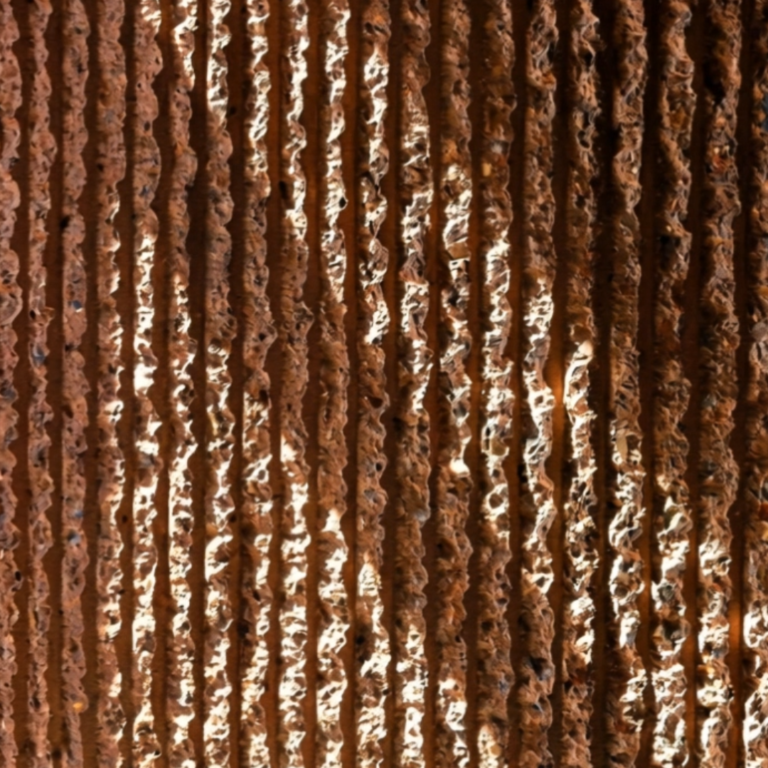
Texture alters the perception of volume.
The building appears to change without moving.
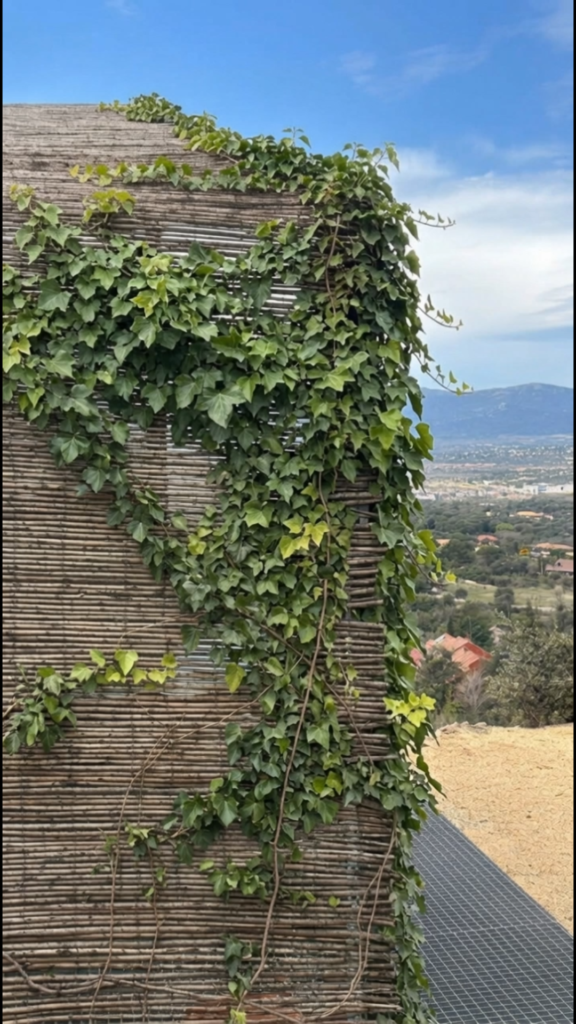
Some buildings can be understood immediately.
Others need to be seen as the day unfolds.
The Fontenebro Pavilion belongs to the latter. Its presence depends not only on geometry, but on the way light gradually activates its surface. Each passing hour subtly alters the perception of the whole.
Architecture, then, is not perceived as a fixed image.
It is perceived as an experience unfolding through time.
It is not only what we see.
It is when we see it.
Where we see it from.
And the light in which it appears.
The materiality of the pavilion is defined by a certain restraint. It does not seek to impose itself, but to gain intensity through light.
Shadow does not conceal the façade.
It completes it.
Light does not erase the texture.
It gives it greater depth.
The volume does not remain unchanged.
It shifts with the afternoon.
This is the value of architecture that does not depend solely on formal novelty, but on its ability to engage with time, climate and perception.
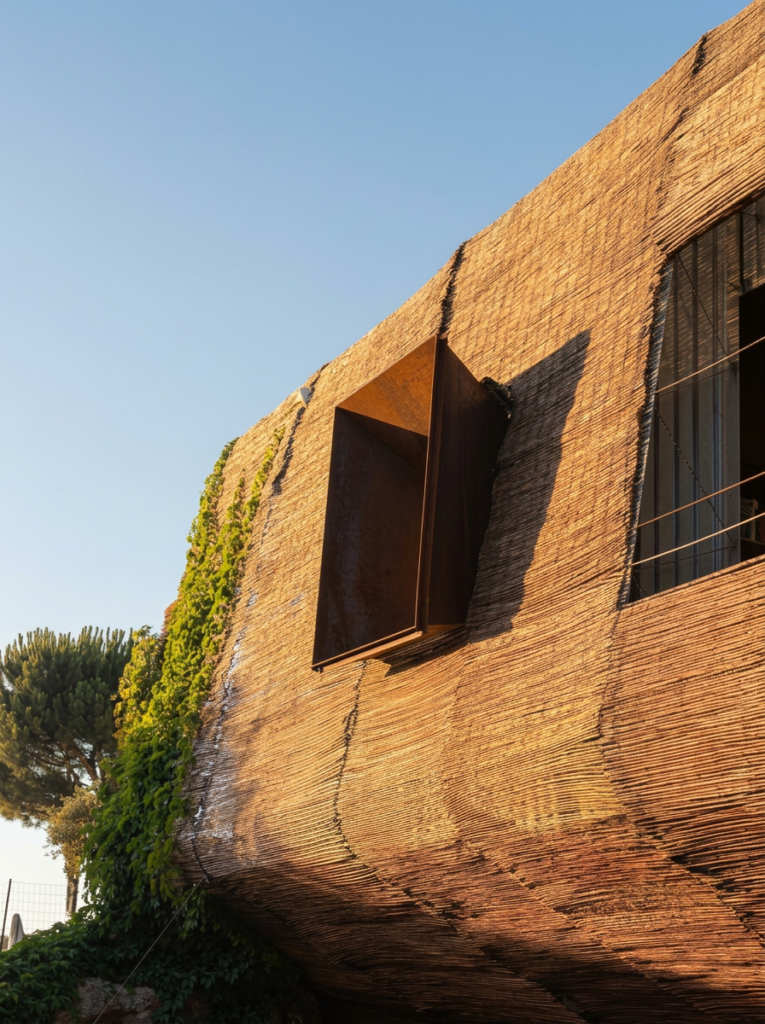
There are moments when a building appears to stand still.
And yet, it is measuring the afternoon.
The Fontenebro Pavilion shows how architecture can gain intensity through essential elements: matter, light, shadow, proportion and time.
It is not simply about constructing a form.
It is about allowing that form to change with the day.
Allowing light to move across it.
Shadow to complete it.
The passing hours to become part of its presence.
Because some architecture cannot be fully understood at a single glance.
It needs time.
And when that time becomes visible, the building begins to speak in a different way.