Fontenebro Pavilion: when buildings can measure time
3 March 2025
Moisés Royo · 23 april 2025 · Structure · Under construction
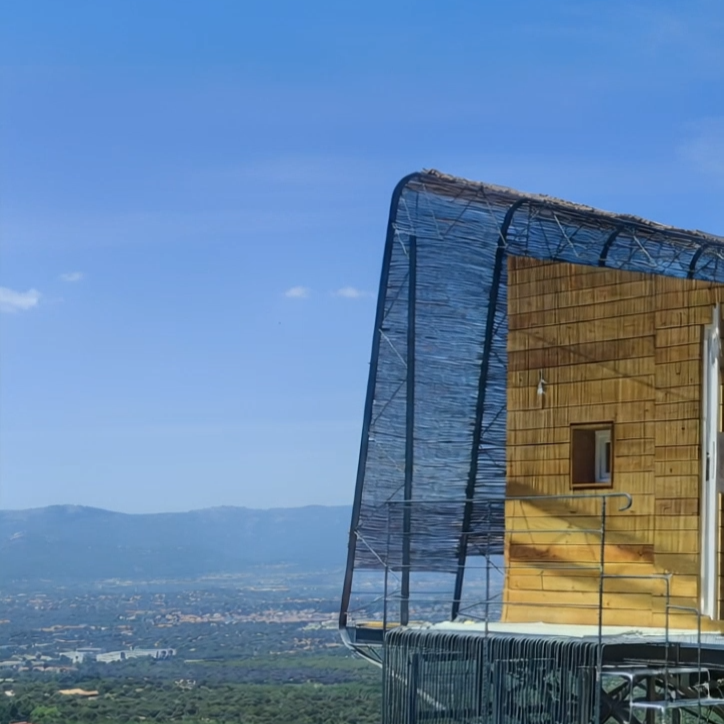
At Estudio Experimental Fontenebro, the slender volume is not shaped as a formal gesture. It narrows as it rises in order to work with natural airflow, making environmental performance part of the architecture itself.
Before deciding what the building should look like, the project had to understand how it should work.
That distinction changes the way Estudio Experimental Fontenebro can be read. The slender volume resting on the landscaped platform does not narrow towards the top merely to create a distinctive silhouette. Its geometry also responds to an environmental decision: to work with air.
The principle is apparently simple. Warm air rises. If the building section supports that movement and encourages differences in pressure and temperature, architecture itself can help establish a continuous natural draught.
Form is no longer simply a visual outcome.
It becomes an environmental tool.
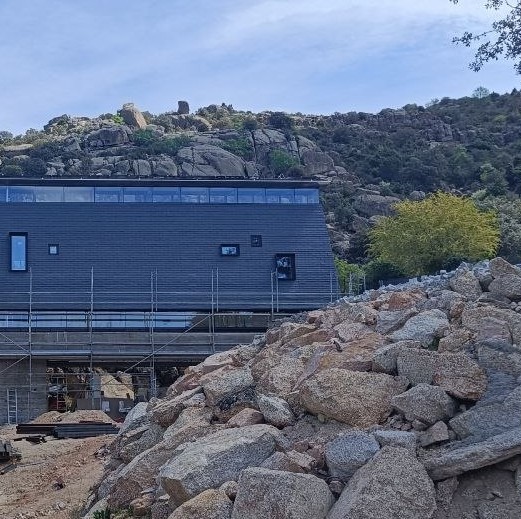
Architecture is often first understood in plan. Here, however, a fundamental part of the project is revealed in section.
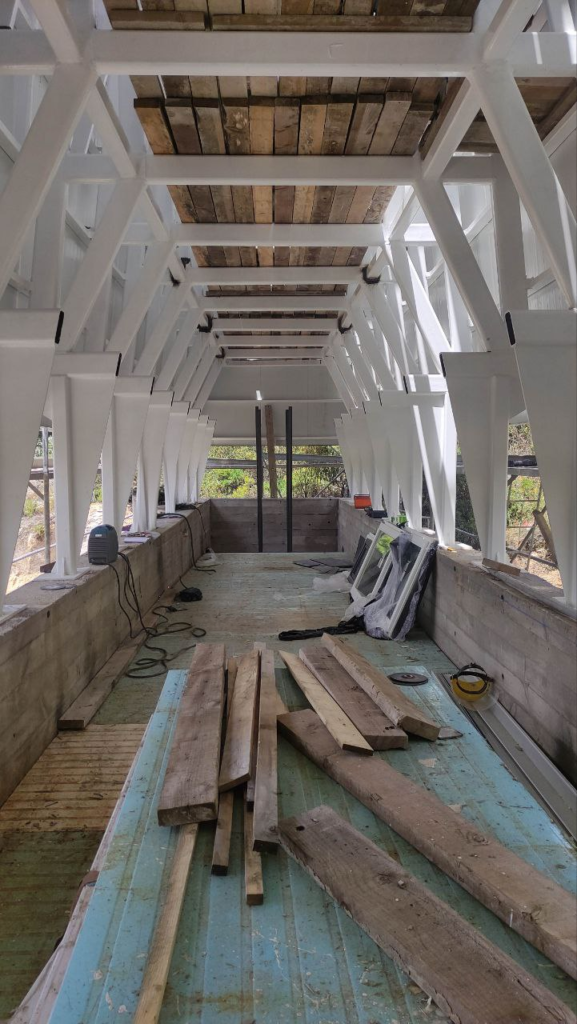
The vertical volume gradually narrows as it rises. This variation creates a tall spatial chamber that accompanies the upward movement of air and supports the natural ventilation strategy described by the project.
Efficiency is not added after the architecture has been designed. It is embedded in the geometry itself.
The section determines how air moves just as a plan determines how people move.
The model makes this relationship particularly clear.
The piece rises through a structure that defines a tall space becoming progressively narrower. Between its elements is a continuous void which is not residual: it is the space through which air can move.
Structure and environmental performance cease to be separate problems.
The structure supports the building, but it also enables the geometry required for passive performance. The technical logic is not concealed behind the architecture. It becomes part of it.
The same approach extends to the relationship with the site.
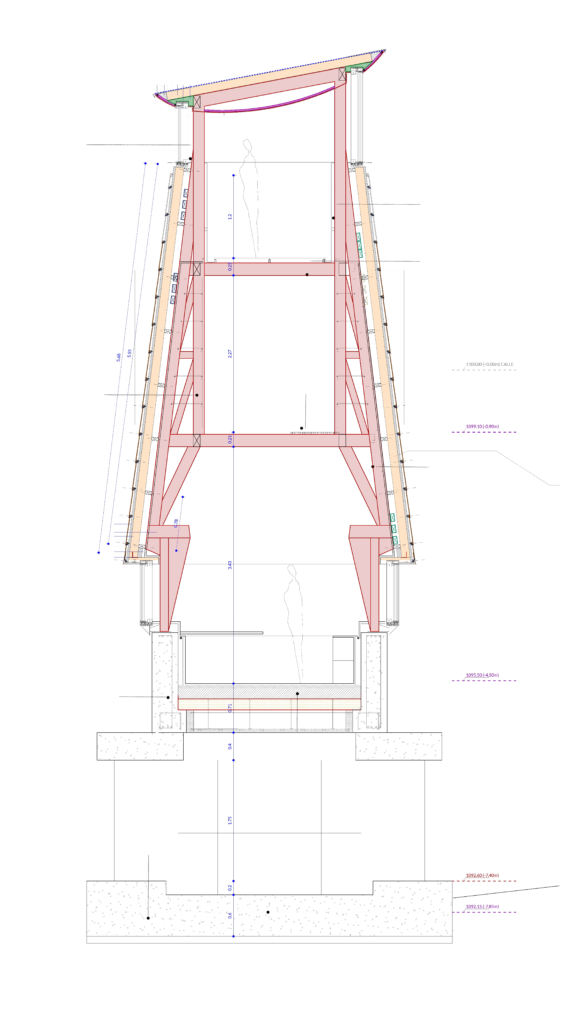
The project occupies a steep plot in Collado Villalba. A principal semi-buried volume absorbs the change in level and is topped by a planted roof finished with the ground of the site, becoming almost a platform within the landscape.
The slender volume rests above it. Its envelope incorporates photovoltaic panels, while a polycarbonate gallery follows the slope and connects the different parts of the complex.
Ground, energy, air and architecture are not treated as independent layers.
They begin shaping the project from the outset.
Sustainability in architecture can easily become a collection of systems, devices and technologies added once the form has already been established.
Fontenebro suggests another possibility.
What if part of a building’s efficiency could begin before anything is installed?
In orientation. In section. In the relationship with the ground. In the way a volume narrows or allows air to find a path through it.
This does not remove technology from the equation. The project itself incorporates a photovoltaic envelope. It changes, instead, the order in which decisions are made.
First, make the architecture perform.
Then complete what it needs.
An unusual geometry can easily be read as a formal pursuit.
Yet form can also be the visible consequence of many invisible decisions.
How air enters.
How it rises.
How heat is released.
How the building meets the ground.
How it produces part of the energy it requires.
When these conditions begin to work together, architecture no longer needs to be explained through image alone.
It is not a gesture.
It is a form that accepts responsibility.
Perhaps this is one of the project’s least visible decisions: making the element that gives the building its recognisable form the same element that helps it perform.