A place to stay: refurbishing to make room for life
3 September 2026
Moisés Royo · 11 junio 2026 · Public architecture · Refurbishment
The lighting of Buitrago de Lozoya Castle does not attempt to turn night into day. Light selects, reveals and withdraws, offering a second reading of an architecture shaped by history.
When daylight disappears, architecture does not disappear with it.
It changes.
Matter seems to lose some of its weight. Walls acquire depth. Surfaces that appeared continuous by day begin to separate into planes, textures, openings and shadow.
At Buitrago de Lozoya Castle, the lighting project begins with this altered perception.
The aim was never simply to make the monument more visible.
It was to consider how it might be seen again.
Lighting historic architecture can easily become a question of quantity: enough light for every wall, tower and route to remain visible.
Yet illuminating everything would remove the very condition that distinguishes night from day.
Darkness.
The project therefore works against uniformity. Light is selective. Certain fragments emerge while others are allowed to recede. Hierarchies shift and a reading appears that could not exist under natural daylight.
The night-time image is not a reproduction of the daytime castle.
It is another architecture of perception.
By day, stone is understood through volume, colour and the continual variation of natural light.
After dark, grazing light can alter that reading entirely.
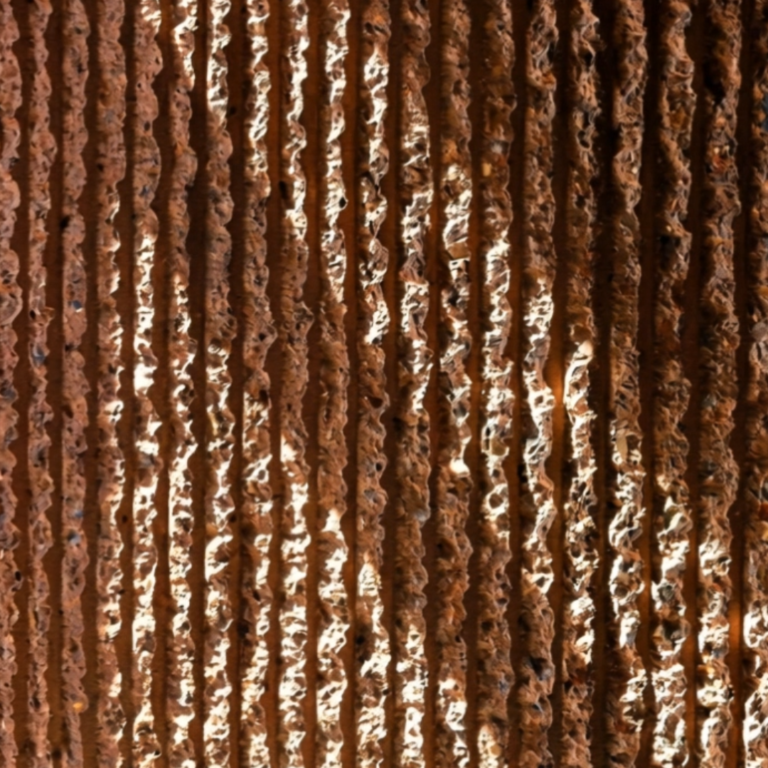
Irregular masonry becomes more pronounced. Joints and textures gain depth. Traces accumulated over time begin to cast their own shadows rather than dissolving into a continuous surface.
Light does not introduce new matter.
It reveals what was already there.
That is why restraint is particularly important when illuminating historic fabric: the intervention should sharpen our attention without becoming more important than the architecture itself.
An opening.
A tower.
An entrance.
A section of wall.
Lighting determines which elements acquire presence after dark and how they relate to one another.
This selection is not purely visual. It also shapes the experience of moving through the place.
Routes can be traced without becoming dominant. Entrances can take on the quality of thresholds. Some depths become legible while others temporarily disappear.
Light guides the eye.
But it must also know when to withdraw.
Darkness is not simply the space left over where lighting has not been installed.
It is part of the project’s material.
It creates contrast, depth and visual silence. It allows an illuminated surface to gain intensity and a fragment of historic fabric to emerge without competing with everything around it.
Every decision about where to introduce light is therefore accompanied by another decision about where not to.
What should be shown.
What should be suggested.
What should remain concealed.
Designing with light also means designing with its absence.
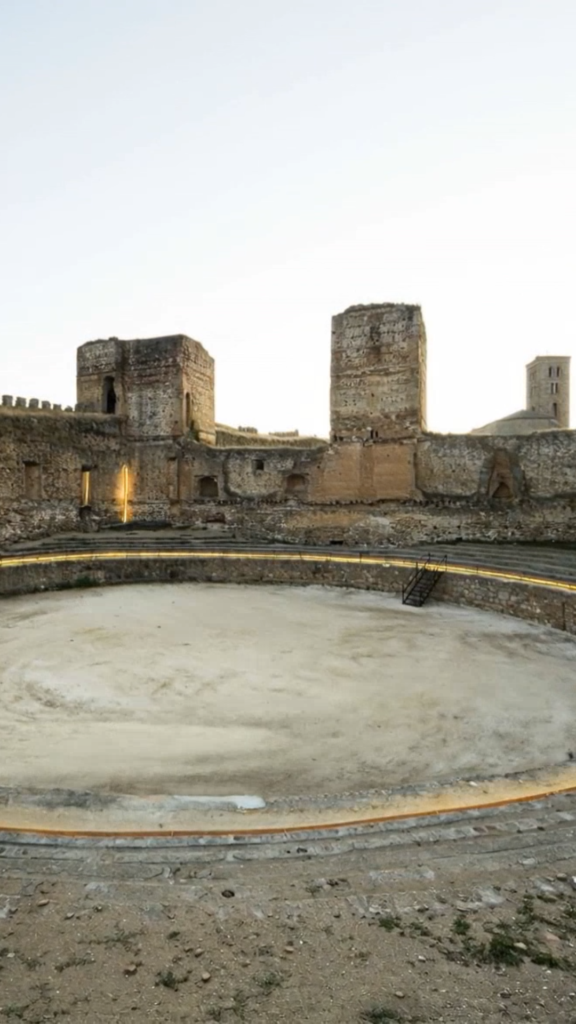
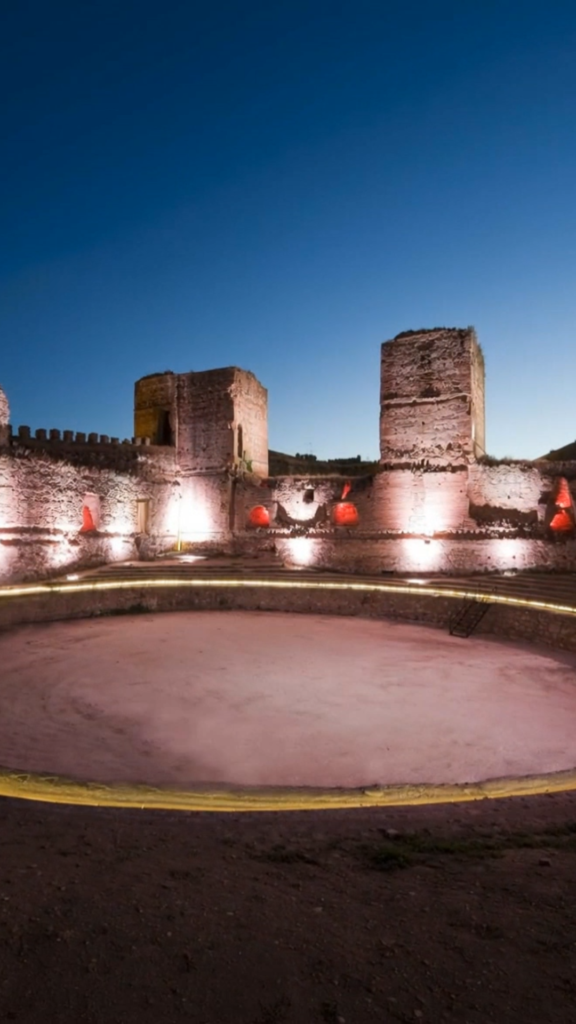
The lighting project does not physically transform the castle.
Its walls remain.
Its towers remain.
The marks of time are not erased.
And yet, for a few hours, the relationships between them are profoundly altered.
New depths appear. Certain fragments move forward while others recede. Routes and thresholds are read differently.
A second architecture is temporarily constructed over the existing one.
Intangible.
Reversible.
Made only of light and darkness.
Working with heritage also means deciding how the present should engage with what has been inherited.
At Buitrago de Lozoya, the lighting does not attempt to compete with the castle’s history or turn it into spectacle.
It offers another way of reading it.
One that exists only once natural light has gone.
Because lighting a monument is also an act of interpretation.
A decision about what appears.
What remains in shadow.
And how the architecture might be encountered again.
When night falls, the building continues to speak.
Only the way we listen has changed.