Invisible decisions: all the way to the table
22 January 2026
At Restaurante Vida, overlooking Palma’s harbour, structure, shade, planting, light and views work together to create something far less tangible than an object: a sense of ease.
Some architectural decisions are designed to be noticed.
Others achieve something rather more difficult: they allow us to forget about architecture altogether.We simply feel comfortable.
At Restaurante Vida, overlooking the harbour in Palma, much of the project is driven by this idea. Architecture is not intended to stand between the guest and the setting. Its role is to establish the conditions through which the two can meet naturally.
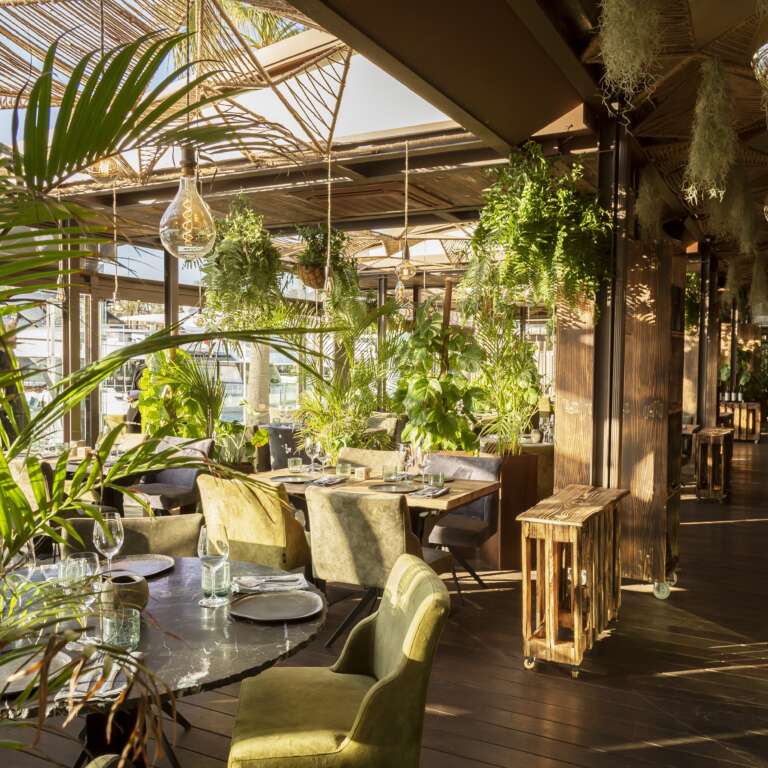
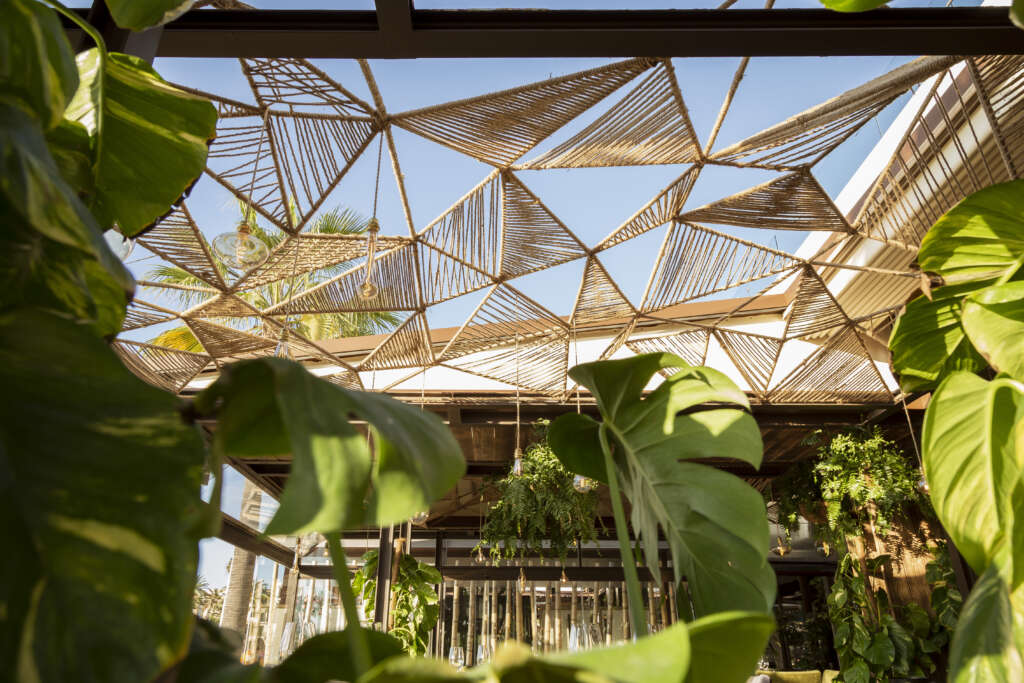
The canopy tempers the sun without cutting off the sky. Its structure creates shade. Planting softens the distinction between inside and outside. Tables are given a degree of privacy while retaining their connection to the view. As daylight shifts, the character of the space shifts with it.
Each of these conditions is carefully designed. Yet none should read as an isolated gesture.
In a restaurant facing the harbour, shelter from the Mediterranean sun cannot come at the expense of the very qualities that make the setting exceptional.
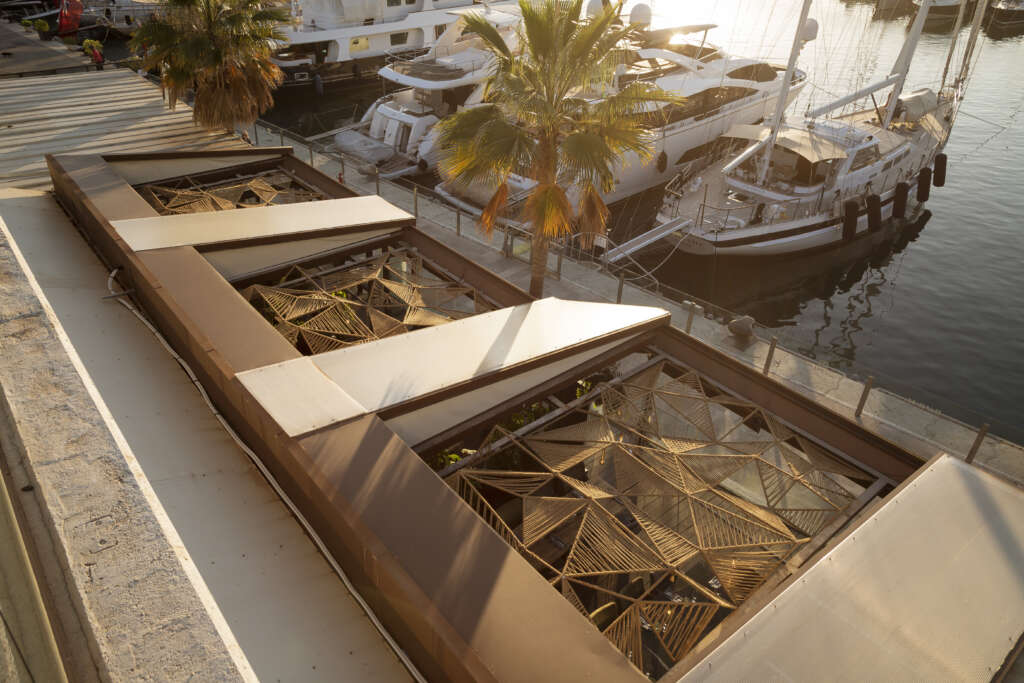
The canopy therefore becomes more than protection from the weather. It mediates between exposure and enclosure, creating a shaded, inhabitable edge while preserving the openness of the terrace.
Along the external passage, the design develops as an approximately 21.61-metre-long triangulated structure. In plan, elevation and perspective, its repeated geometry reveals a carefully controlled system: continuous enough to define the space, yet visually open enough to avoid becoming a heavy ceiling.
Structure is not separate from experience here. It is what makes shade possible while allowing the sky to remain part of the room.
Structure is often discussed in terms of what it carries.
But it also determines how a place feels.
At Restaurante Vida, the canopy is not simply a technical solution. Its depth, rhythm and triangulated geometry influence the way light enters the terrace and the way the space is perceived from below.
At one moment it offers protection; at another, sunlight passes through and the pattern of shade changes. Architecture becomes less a fixed image than a framework for conditions that evolve throughout the day.
The intention is not to freeze light into a single composition. It is to control it just enough for time to remain perceptible.
The proximity of the sea and the direct relationship with Palma’s harbour are fundamental to the project. Yet a view alone does not make a place comfortable.
Occupation has to be designed too.
The arrangement of tables, planting and spatial filters creates different degrees of privacy without severing the visual connection to the surroundings. Guests can feel sheltered without being enclosed, part of the restaurant while still connected to the horizon beyond it.
This balance matters particularly in hospitality architecture: being among people without feeling exposed; looking outward without losing a sense of scale; allowing the harbour to remain present without reducing the entire interior to a viewpoint.
Calculate. Order. Orientate. Protect. Frame. Proportion.
Much of an architect’s work takes place long before a guest enters the building.
Solar exposure is considered. Structural positions are tested. Depths of shade are measured. Distances between tables are adjusted. Routes, planting, proportions and views are coordinated.
But the finished space should not feel like an accumulation of solutions.
When these decisions work together, they stop demanding attention. A guest does not need to understand why the terrace feels comfortable, identify the structural logic or analyse the orientation.
They simply inhabit it
Perhaps this is one of the most meaningful measures of architecture.
Not how insistently it announces itself, but how successfully it can recede behind the experience it enables.
At Restaurante Vida, canopy, structure, planting, furniture, daylight and harbour are not separate episodes. Together they establish a setting in which everything appears to sit naturally in its place.
Sometimes the most successful architecture is not the architecture we immediately notice.
It is the architecture that has considered every decision carefully enough for us, once we arrive, to stop thinking about it.
And simply feel:
this is a good place to be.