The house revealed by mist
12 November 2026
Moisés Royo · 10 June 2025 · Landscape
An intervention at the entrance and columbarium of Lozoya Cemetery, where architecture works through measure, respect, care and memory
In a cemetery, architecture works with something that can barely be seen.
With measure.
With respect.
With the way we arrive, pause and remember.
The intervention at the entrance and columbarium of Lozoya Cemetery begins with this delicate condition. It was not about adding another element or creating architecture that sought attention. The aim was more precise: to give order to a gesture.
To make the approach clearer.
More serene.
More human.
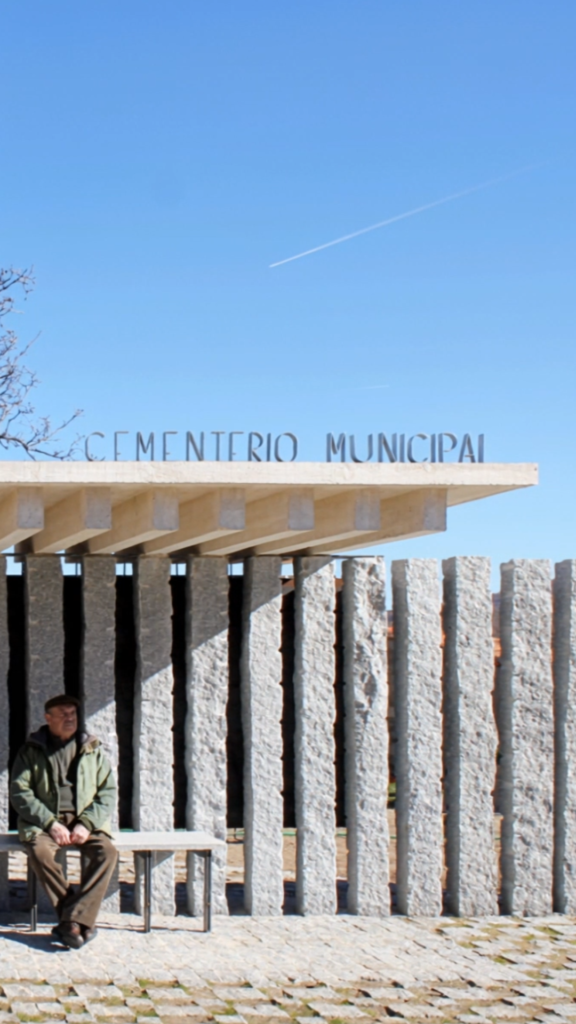
There are places where architecture should not seek an immediate emotional response.
It should care.
Care for the scale.
Care for the arrival.
Care for the boundary.
Care for the shade.
Care for the way a person approaches a place of memory.
In Lozoya, the project works through this restraint. The architecture does not impose itself on the cemetery; instead, it helps bring clarity to the entrance and dignity to the approach.
The wall does not simply enclose.
It also embraces.
The bench does not simply offer a place to sit.
It also offers a moment of pause.
The columbarium does not simply fulfil a function.
It also gives scale to remembrance.
The entrance to a cemetery is unlike any other entrance.
It is a transition between the everyday and contemplation. Between the path outside and a place where time seems to behave differently.
That is why every decision needed to be simple, yet precise.
To add no more than necessary.
Not to turn memory into an image.
Not to seek prominence where there should be silence.
Here, architecture emerges through very specific actions: ordering the approach, measuring distance, creating shade, defining a boundary, offering a place to pause.
A wall can be understood simply as an enclosure.
But it can also be a way of creating a sense of contemplation.
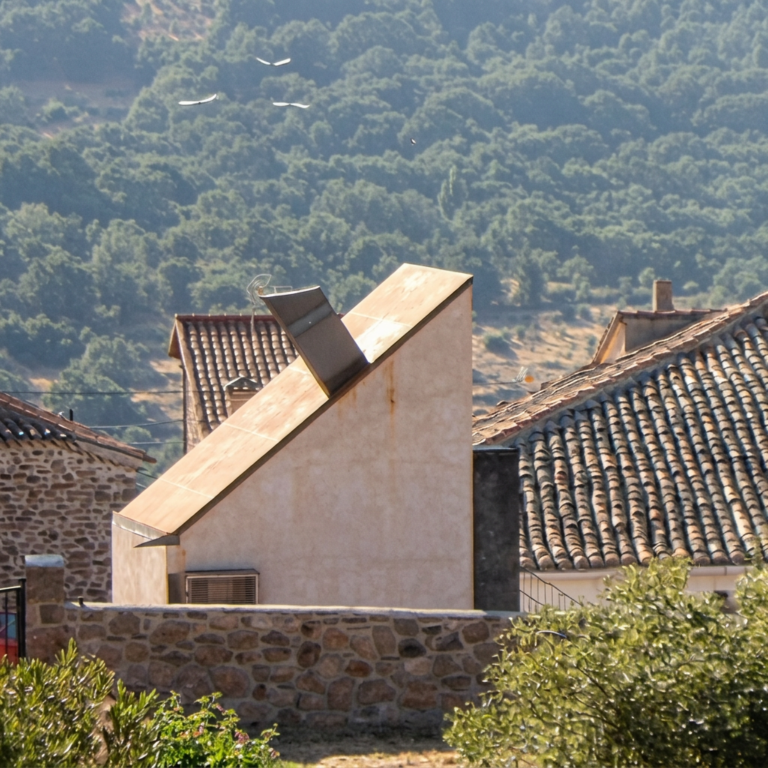
At Lozoya Cemetery, the wall helps define the entrance, organise the approach and establish a more serene relationship with the place. It functions not only as a physical boundary, but as an element that accompanies the passage through it.
It encloses, without becoming severe.
It defines, without completely separating.
It protects, without isolating.
This intermediate condition is essential in an intervention of this kind: the project was not intended to disrupt the existing atmosphere, but to give it a clearer form.
In sensitive projects, intensity does not always lie in an obvious gesture.
Sometimes it lies in the precision of simplicity.
In the proportion of a plane.
In the shadow cast by an opening.
In the position of a bench.
In the way a person is able to pause.
In the relationship between the wall, the columbarium and the landscape.
Architecture does not need to explain too much.
It should allow the place to speak.
For silence to have scale.
For the approach to have clarity.
For memory to find a form.
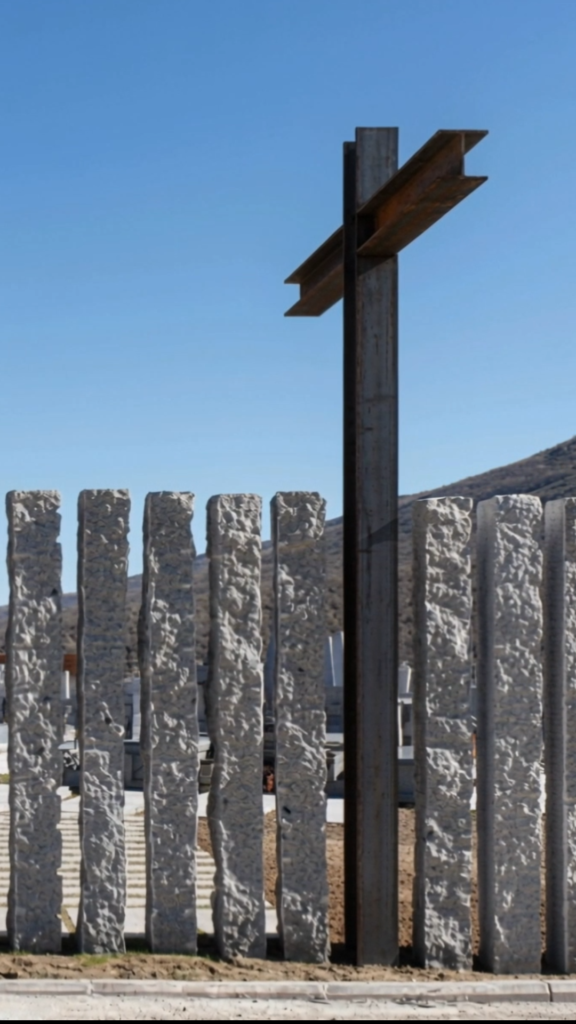
The intervention at Lozoya Cemetery speaks of an architecture that is restrained, sober and deeply human.
An architecture that does not seek easy emotion, but care.
Because there are places where building does not mean adding presence, but measuring it. Where designing is not about imposing a form, but understanding what a place needs in order to become clearer, more dignified and more serene.
In Lozoya, architecture gives scale to silence.
And form to memory.