Invisible decisions: when architecture recedes into the background
17 December 2025
At Restaurante Vida, furniture does not arrive after the architecture. The tables are part of it: they set distances, organise movement and bring the relationship between matter, planting, light and the sea down to the scale of the body.
Where does an architectural project really end?
Sometimes, at a table.
At Restaurante Vida, furniture was never treated as the final layer added once the architecture had been resolved. From the outset, the tables belonged to the same question as the rest of the project: how should this restaurant be inhabited?
A table is never simply a surface for dining. Its dimensions establish proximity. Its position directs movement. Its height changes posture and the relationship between people. Its material presence is encountered at close range, becoming part of the atmosphere through touch as much as through sight.
Designing the tables, therefore, was also an act of architecture.
Architecture is often described through plans, sections, façades and large spatial gestures. Yet every one of those decisions eventually meets the body.
In a restaurant, that encounter is unusually direct. We approach a table, pull out a chair, sit opposite someone else. Distance stops being an abstract dimension and becomes intimacy. Height stops being a number on a drawing and begins to shape posture. A circulation route ends at a particular place that someone will occupy for an hour or an evening.
At Vida, the tables were developed in a range of geometries, dimensions and heights to respond to different conditions within the restaurant. The furniture drawings include circular and rectangular pieces, conventional dining heights and taller tables. Rather than repeating a single solution throughout the interior, the family of tables calibrates different ways of gathering, moving and occupying the room.
When that calibration works, it is almost invisible. A guest should not need to notice the exact clearance between two pieces of furniture or the relationship between a table base and the route around it. Yet these are precisely the quiet decisions that make the experience feel effortless.
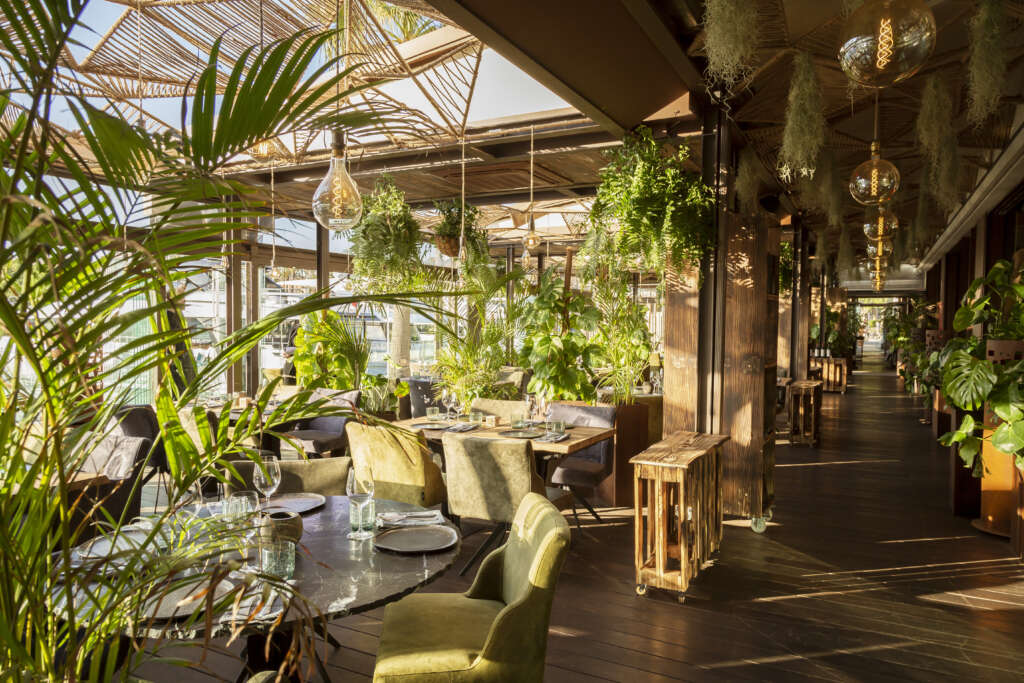
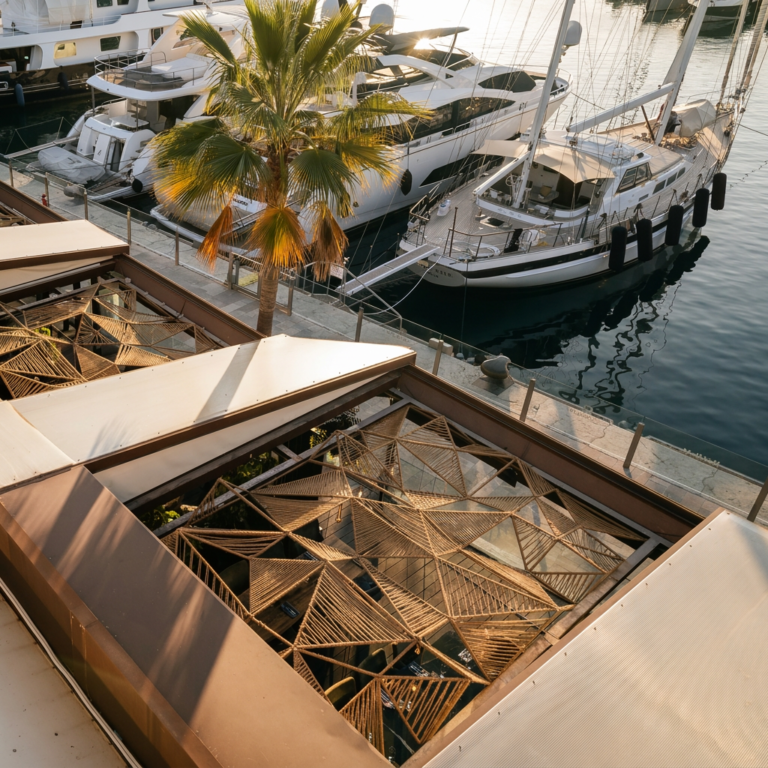
Restaurante Vida is shaped by the meeting of two worlds: sea and land. Set beside the harbour in Palma de Mallorca, the project moves between a nautical language and a more tactile, vegetal one. Ropes, knots and the nearby boats sit alongside timber, planting and materials that evoke the island itself.
Within that narrative, the furniture could not behave as a collection of autonomous objects. It had to belong to the same interior landscape.
The metal table structures are formed from plate ribs that open beneath the top in an organic geometry. Instead of a conventional leg, the support becomes almost plant-like: structural, branching and expressive enough to echo the restaurant’s vegetal character without demanding attention for itself.
The long communal table was likewise developed as a project-specific piece, with a sequence of tailored supports responding to its length. The technical precision behind these elements — plate thicknesses, bases, junctions and adjustable supports — is not intended to be read as an exhibition of detail. Its purpose is the opposite: to make each piece feel entirely at home in the room.
Some architectural decisions announce themselves immediately: a large opening towards the sea, a structural gesture, a ceiling, a particular material.
Others operate quietly in the background.
The position of a table. The way its base leaves room for the legs. The possibility of approaching, separating or crossing the dining room without obstruction. The shift between a high table and a lower one. The visual continuity between the furniture and the planting around it.
Most guests will never consciously register these decisions over dinner. That is precisely why they matter.
When they are resolved well, they disappear as problems. The room simply works. Conversation finds a comfortable distance. Movement feels natural. Materials accompany the experience without overwhelming it.
Architecture is also the craft of creating that sense of ease.
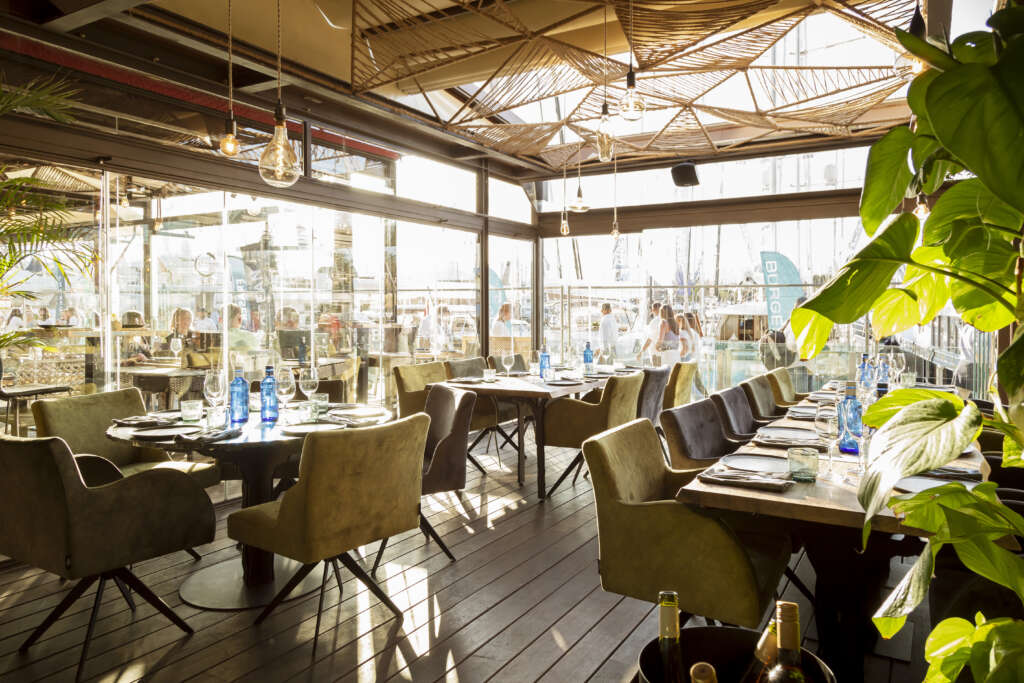
At Vida, proximity to the sea is not treated as decorative imagery. The harbour is physically present through the large glazed opening, the boats beyond it and an atmosphere that changes markedly from day to night. The interior translates that condition through light, ceilings, planting, timber and furniture.
The table becomes the final link in a much longer sequence. The landscape enters through the window. Architecture interprets it. Materials give it atmosphere. Furniture brings that atmosphere into direct contact with the body.
Until architecture becomes something you can touch.
Designing a restaurant is not simply a matter of deciding how it should look.
It means deciding how people enter, move, pause and gather; how close they sit to one another; what they touch; what they see; and how the room changes once it is full of life.
That is why the project does not necessarily end at the wall, the ceiling or the large window overlooking the harbour.
Sometimes it continues into something apparently much smaller.
At Restaurante Vida, it continues into the tables: pieces conceived not as additions to the architecture, but as one of its final extensions.
“Some of the decisions that shape our experience of
a space most profoundly are the ones we barely notice.“