Clay within stone: Casa Piedrabuena at IE University
6 July 2026
Teaching architecture is not about giving answers, but helping to formulate better questions
Learning architecture is, to a large extent, learning to look with greater precision. To pause before what seems already familiar and discover that it still contains relationships, proportions, tensions and possibilities we had not yet seen.
That is why a tutorial should not consist of telling a student what to do. Teaching is not about replacing one decision with another or imposing a solution through the teacher’s experience. It is about accompanying a process and helping the project begin to reveal what still remains unclear.
A jury is precisely one of those moments. For a few hours, the project pauses, becomes slightly detached from the person who produced it and can be observed from the outside. That distance is essential. It makes it possible to see which ideas have acquired consistency, which are not yet sufficiently developed and which questions need to be asked for the work to continue moving forward.
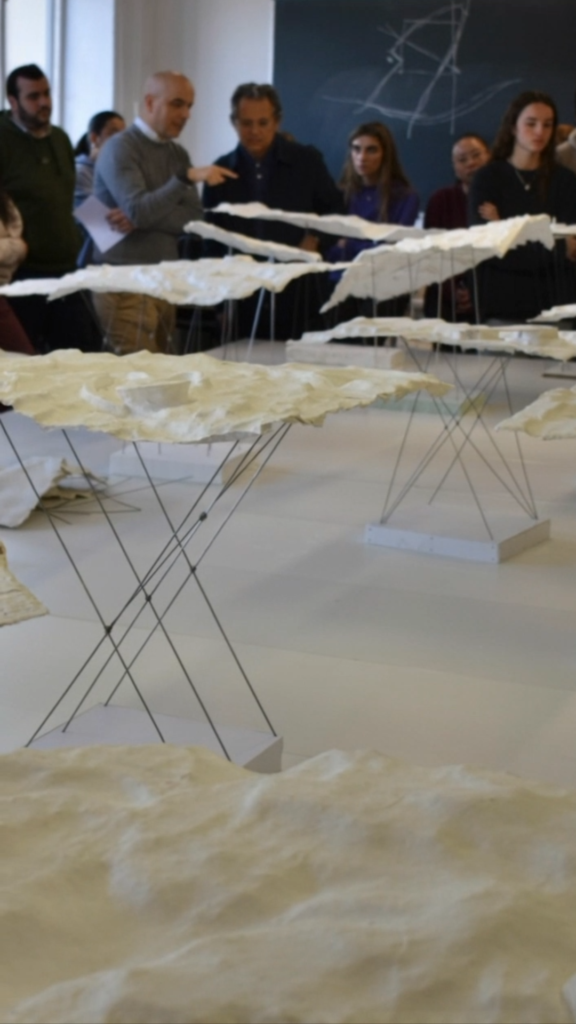
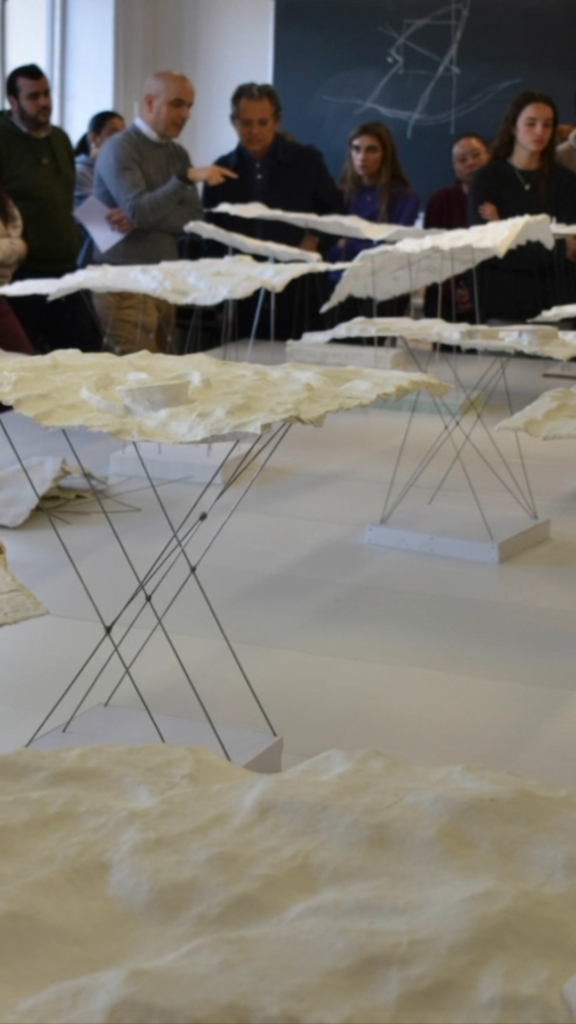
The model has a particularly important place in this process. It is not simply a way of representing architecture that has already been conceived. Very often, it is exactly the opposite: a tool for thinking through what we have not yet been able to resolve.
Building a model forces us to confront scale, matter, void and the relationships between parts in physical terms. The hands discover problems that drawing can conceal and, at the same time, reveal possibilities that had not yet appeared on paper.
Slightly changing a piece, removing a volume, shifting a plane or opening a void can completely alter the reading of a project. The model makes it possible to observe these transformations immediately and almost intuitively.
That is why I am particularly interested in the idea of thinking with the hands. Because architecture is not shaped solely through abstract concepts. It needs to acquire weight, thickness, distance and scale. It needs to be capable of being explored with the eye before it exists.
The role of the teacher, then, is not to produce a better version of the student’s project. It is to help them develop the tools they need to construct their own response.
That requires a certain restraint.
When discussing a project, the most immediate temptation is often to offer a solution. But a solution may resolve the problem at hand while preventing something far more important from emerging: judgement.
Teaching architecture means helping students recognise which questions are relevant, which decisions have real consequences and which relationships are worth investigating. It means accompanying them until they are able to see for themselves what they previously needed someone else to point out.
In that sense, a good tutorial should not close a project down. It should open it up.
The role of the teacher, then, is not to produce a better version of the student’s project. It is to help them develop the tools they need to construct their own response.
That requires a certain restraint.
When discussing a project, the most immediate temptation is often to offer a solution. But a solution may resolve the problem at hand while preventing something far more important from emerging: judgement.
Teaching architecture means helping students recognise which questions are relevant, which decisions have real consequences and which relationships are worth investigating. It means accompanying them until they are able to see for themselves what they previously needed someone else to point out.
In that sense, a good tutorial should not close a project down.
It should open it up.
Over time, many of the tools learnt at architecture school change. Software evolves, construction systems develop and methods of representation are continually transformed.
But one ability remains.
The ability to look.
To look at a model and understand what happens between two volumes. To look at a plan and discover a relationship that has yet to be resolved. To look at a place and understand what it asks for. To look at a project and distinguish between what responds to an intention and what has simply happened.
Perhaps that is why teaching architecture has less to do with transmitting answers and much more to do with teaching how to formulate questions.
Questions capable of helping an idea find greater clarity, structure and meaning.
Because learning architecture is not only about learning how to design.
Above all, it is about learning to look.