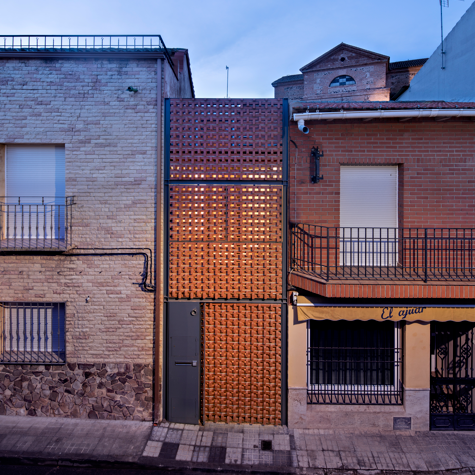
A breathing façade: clay, air and climate
27 March 2025
Moisés Royo · 6 July 2026 · Talks
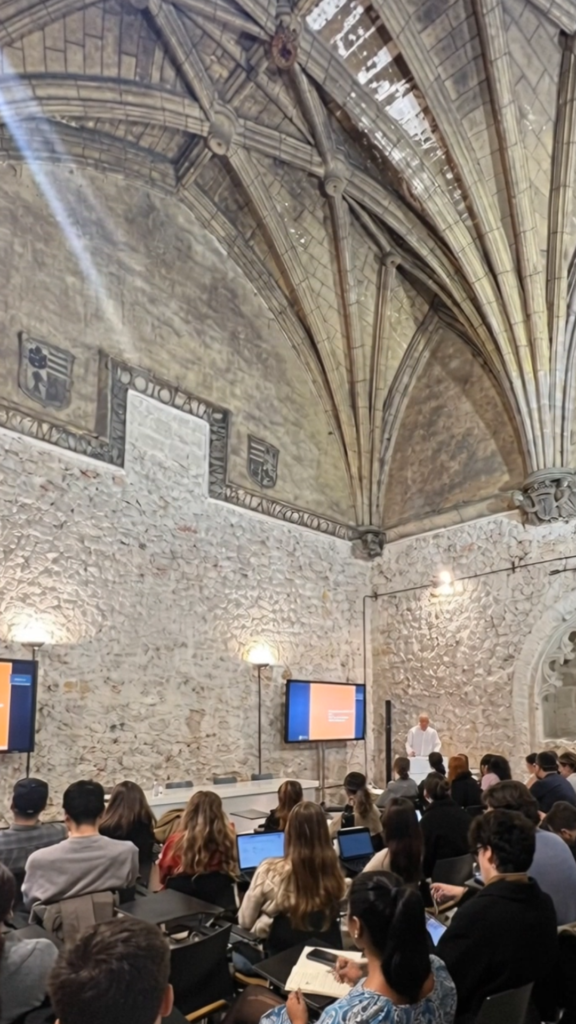
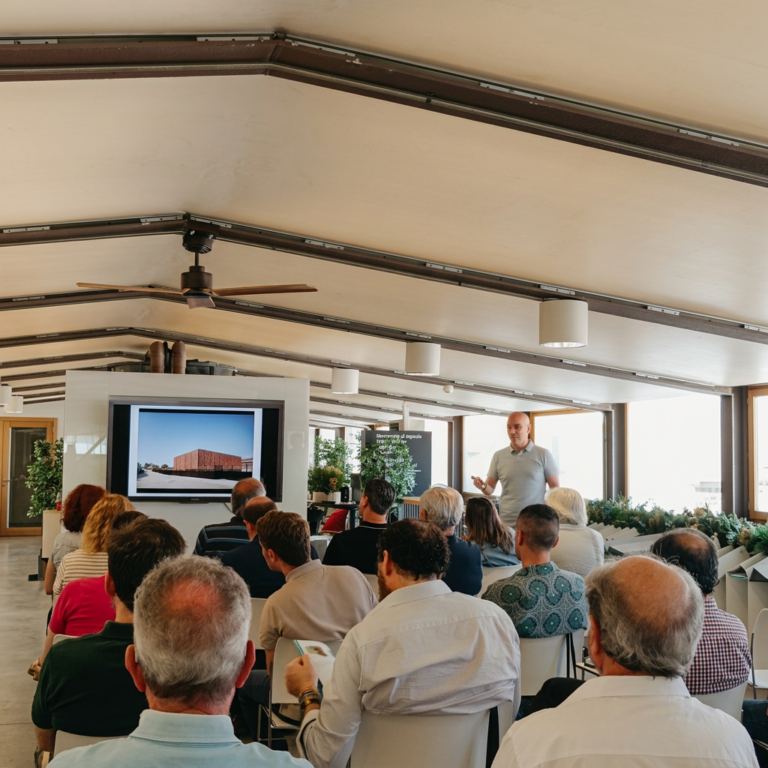
Moisés Royo presents Casa Piedrabuena at IE University’s School of Architecture in Segovia, in a talk exploring material, light, memory and contemporary architectural decisions
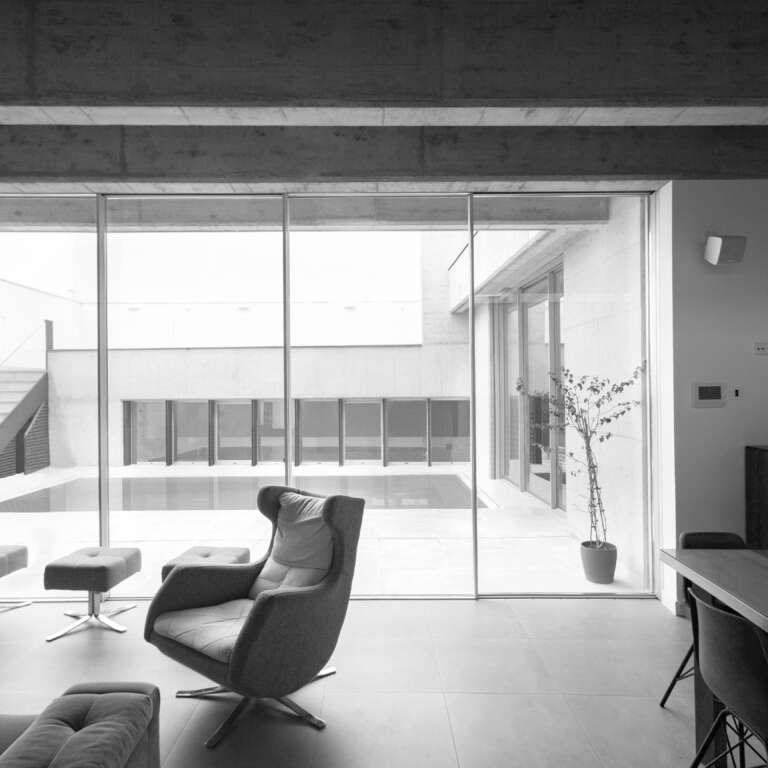
During the talk, Moisés Royo shared the process behind Casa Piedrabuena with the students, a home shaped by a precise relationship between matter, light, place and ways of living.
The setting added another layer to the conversation: the former Convent of Santa Cruz la Real, a building shaped by centuries of transformation and successive uses. Against this architecture of stone and memory, the project offered an opportunity to explore another form of permanence, one connected to clay, earth and the transformation of material.
Stone spoke of memory.
Clay, of transformation.
This tension helped explain one of the project’s central ideas: how an apparently humble material can, through architectural decisions, become a contemporary response.
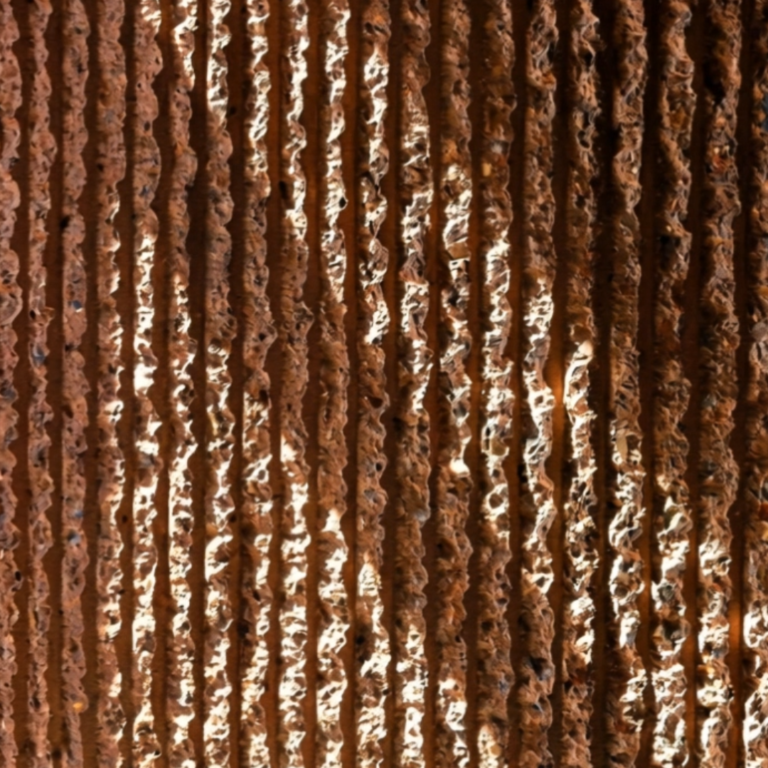
At Casa Piedrabuena, clay does not appear as a nostalgic reference or as a quotation of tradition. Nor is it understood simply as a finish or texture.
Clay becomes a way of thinking about the house.
It has thickness.
It has temperature.
It has shadow.
It has proximity.
It has time.
Its presence creates a more direct relationship between the body, space and place. It introduces a tactile and atmospheric quality that belongs not only to the image, but to the experience of inhabiting the house.
At a time when many homes are conceived around immediate appearance, Casa Piedrabuena offers another perspective: an architecture in which material is not added at the end, but participates from the outset in defining the project.
The house is not built from materials alone.
It is built through decisions.
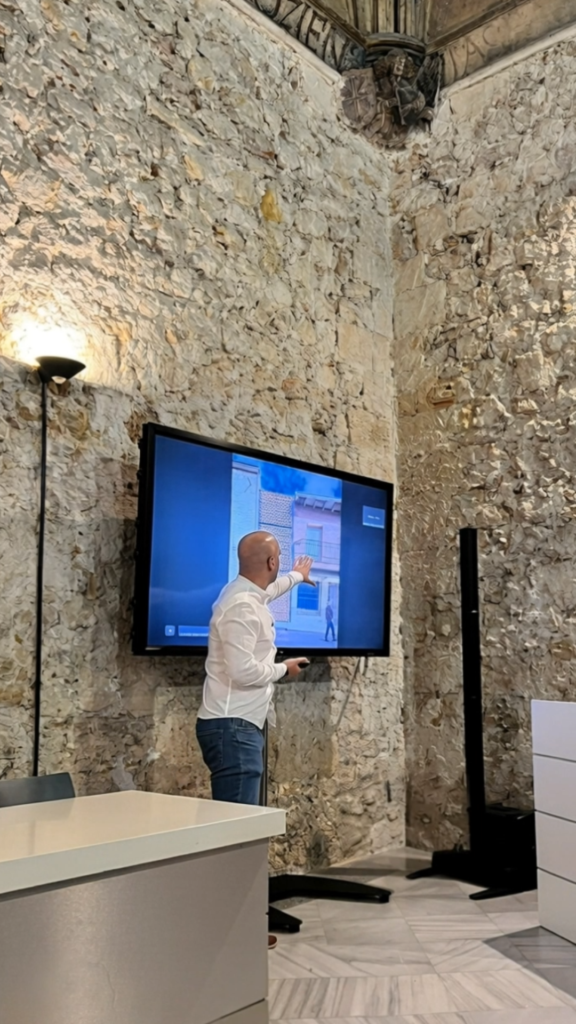
Presenting a house at a school of architecture means retracing the path that made it possible.
A completed house can appear to be a finished image. Yet behind that image lie many earlier decisions: why this material, why this light, why this proportion, why this way of building, why this particular relationship with the place.
Presenting Casa Piedrabuena at IE University was a way of pausing to examine that process.
It was not simply about showing the final result, but about sharing the layers that underpin it: the reading of the surroundings, the choice of materials, the spatial sequence, the relationship between mass and light, and the way each decision shapes a particular domestic experience.
When a project is carefully considered, it does not appear as a collection of independent gestures.
It appears as a continuity.
Casa Piedrabuena begins with a very clear material condition. Clay is not used to create a recognisable image, but to establish a relationship with climate, light and time.
Matter absorbs, reflects, protects and accompanies. Light does not act as a decorative device, but as a measure of space. Place is understood not simply as a setting, but as an active condition of the project.
That is why the house does not seek to impose itself. It seeks to belong.
To belong does not mean imitating what already exists or reproducing an image of the past. It means reading the existing conditions with precision and transforming them into an architecture capable of responding to the present.
The setting of the talk in Segovia captures this tension particularly well. Clay within stone.
A material tied to the earth, discussed within a historic space shaped by weight, permanence and memory.
Stone seemed to speak of what endures.
Clay, of what can be transformed without losing its connection to its origins.
Between these two materials emerged an essential question for contemporary architecture: how can we build today with materials capable of belonging to a place without becoming an imitation of it?
Because a home is not only what it reveals.
It is also what it orders, what it protects, what it holds and what allows us to live differently.
At Casa Piedrabuena, matter, light and the relationship with place are part of a single strategy. They are not independent elements, but decisions that create coherence.
And perhaps that is where an essential part of architecture lies: bringing order to complexity until it appears simple.