Casa Farol at MATCOAM: ceramic architecture, industrialisation and precision
26 May 2026
Moisés Royo · 25 october 2025 ·Atmosphere · Villa · Completed
At Casa Farol, ceramic is not a finish applied to the architecture. It shapes the volume, establishes rhythm and depth, and allows daylight to transform the house throughout the day.
At first glance, Casa Farol could be described as a simple box.
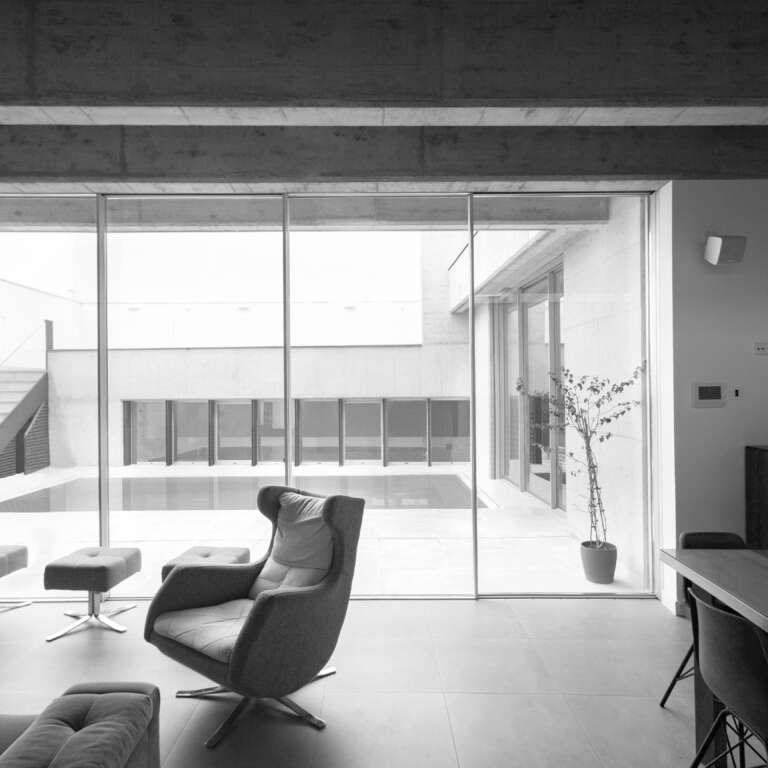
A precise volume of fired clay, suspended above the plot.
Yet much of the project’s complexity is contained within that apparent simplicity.
Completed in Griñón, Madrid, in 2022, the house uses a material deeply rooted in architectural history — ceramic — to address distinctly contemporary conditions.
Here, ceramic does not arrive at the end to dress the architecture. It belongs to the architecture from the outset.
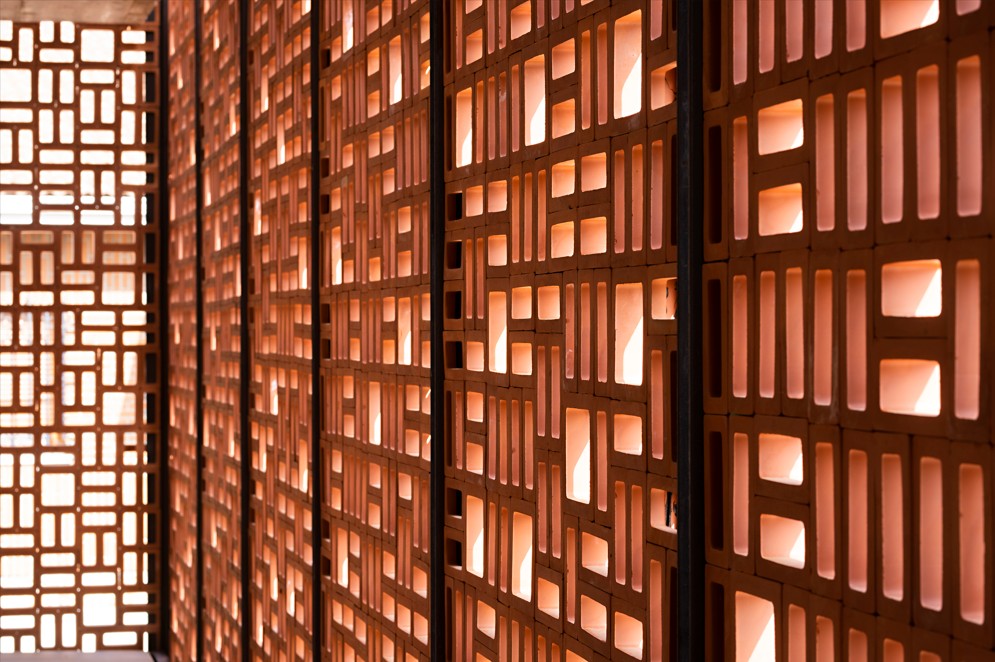
Some materials cover a building. Others are capable of organising it.
At Casa Farol, fired clay belongs to the latter category.
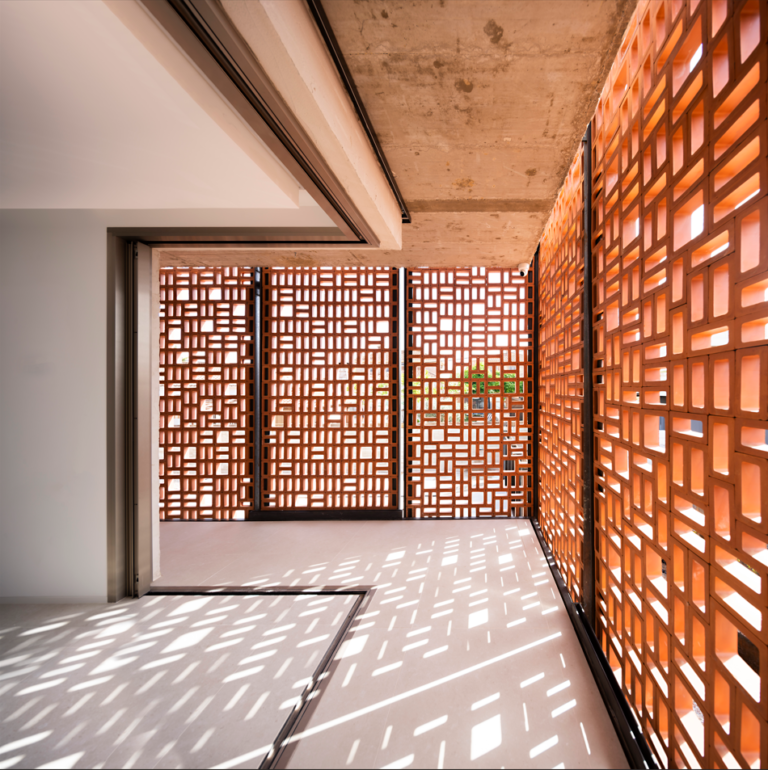
The ceramic envelope helps define the volume, its relationship with its surroundings and, above all, the way daylight reaches and transforms it.
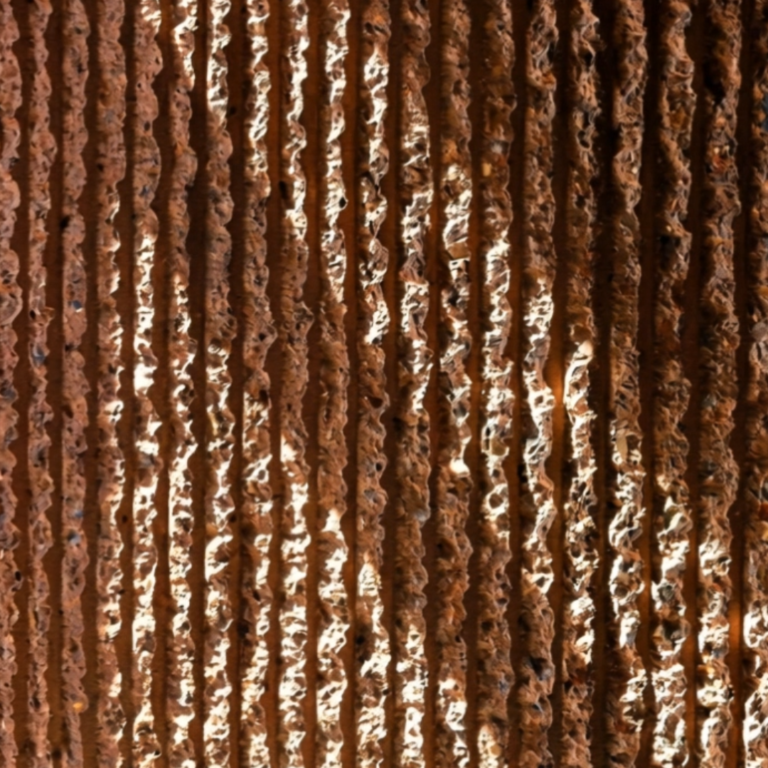
Matter is no longer a static surface. Light grazes it, passes across it, casts shadows and alters its depth. What can appear compact from a distance begins to fragment as the viewpoint or time of day changes.
The geometry remains.
Its perception changes.
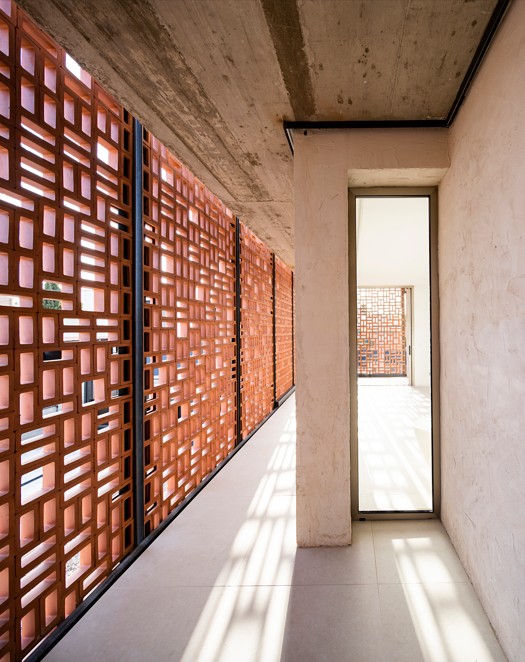
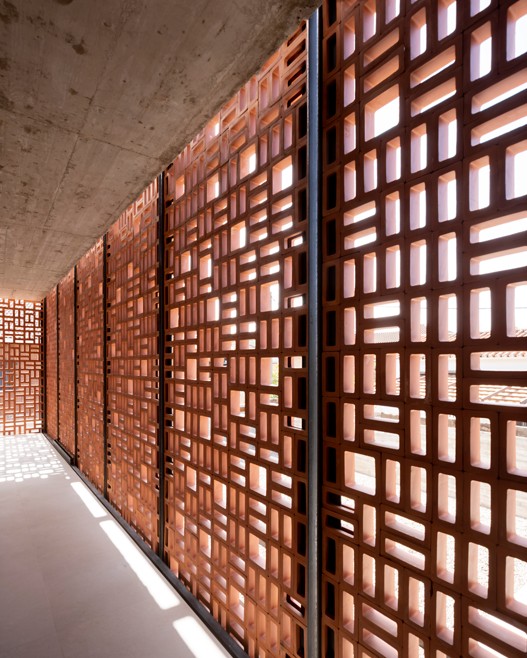
Ceramic introduces another fundamental condition: architecture is assembled through repetition.
One unit meets another. A joint appears. Then another. A relatively small component gradually defines the scale of the entire house.
Building and detail no longer belong to separate stages of design. The scale of the house depends on the scale of the unit.
This logic demands rhythm, modulation, junctions and tolerances. The final appearance cannot be separated from the way each element is placed beside the next.
Construction is therefore not simply the materialisation of a previously determined form.
Form also emerges from the way the building is made.
The project describes Casa Farol as a simple, suspended box of fired clay. That description contains a particularly productive contradiction.
Clay suggests weight, mass and elemental matter. Yet the volume appears detached from the ground, relieved of some of that weight.
Heavy and light.
Compact and permeable.
Precise and changeable.
The architecture works between these conditions rather than resolving them in favour of one.
Their tension is precisely what gives the house its character.
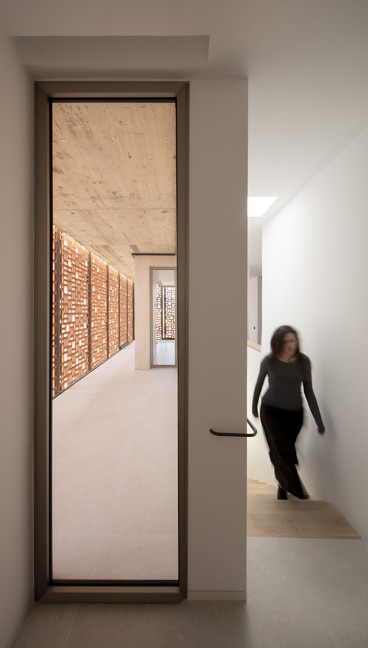
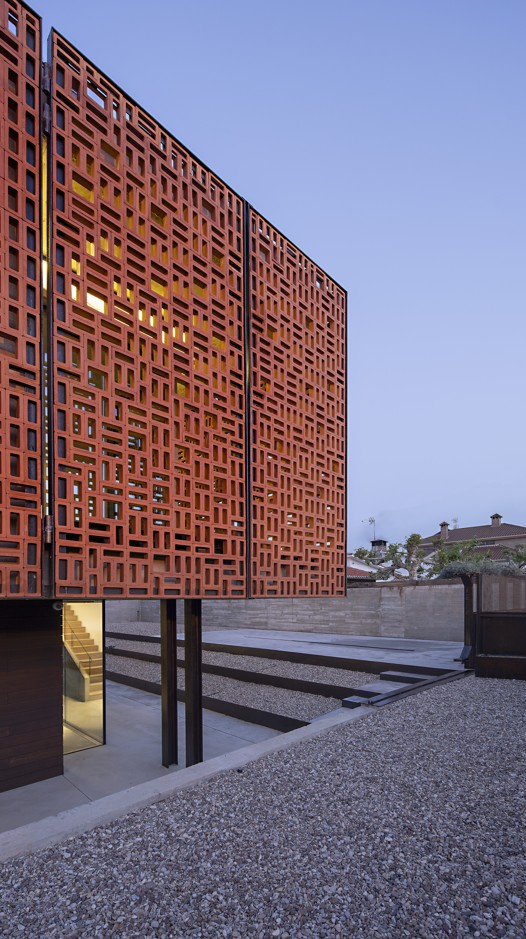
At Casa Farol, daylight is not added to matter.
It depends upon it.
A shadow needs depth. A reflection needs a surface. Change throughout the day requires an architecture capable of receiving it.
The ceramic envelope makes those changes visible. At certain hours the volume reads as almost continuous; at others, shadows reveal each unit, opening and depth.
The house does not need to move in order to change. Time changes it.
A material associated with permanence therefore produces an architecture whose perception is never entirely fixed.
Working with ceramic does not mean looking backwards.
Casa Farol shows how a traditional material can participate in a contemporary discussion about repetition, precision and construction systems.
Innovation does not always require inventing a new material. Sometimes it means looking again at a familiar one and asking what else it can do.
In 2022, the house was shortlisted for ArchDaily Building of the Year and was also a finalist in the international Brick Awards. Beyond recognition itself, these distinctions point towards a central quality of the project: its ability to turn an elemental material into the architectural argument of the entire house.
Casa Farol begins with very few elements.
A clear geometry.
Ceramic.
Air.
Shadow.
Light.
Reducing the number of elements does not mean reducing the architecture.
It means asking more of each one.
Clay creates a boundary, but also depth. Repetition creates a surface, but also rhythm. Daylight reveals matter while ensuring that it is never perceived in exactly the same way.
Perhaps this is why Casa Farol cannot be understood through form alone.
It becomes legible through the way that form changes when light meets matter.